
Founder and Head of Growth, White Label Comedy
The internet's biggest collection of genuinely funny brand posts, each with a quick note on why it works and what you can steal from it. 80 examples and counting, pulled straight from our blog.
Dave Harland – Copywriting vs. AI
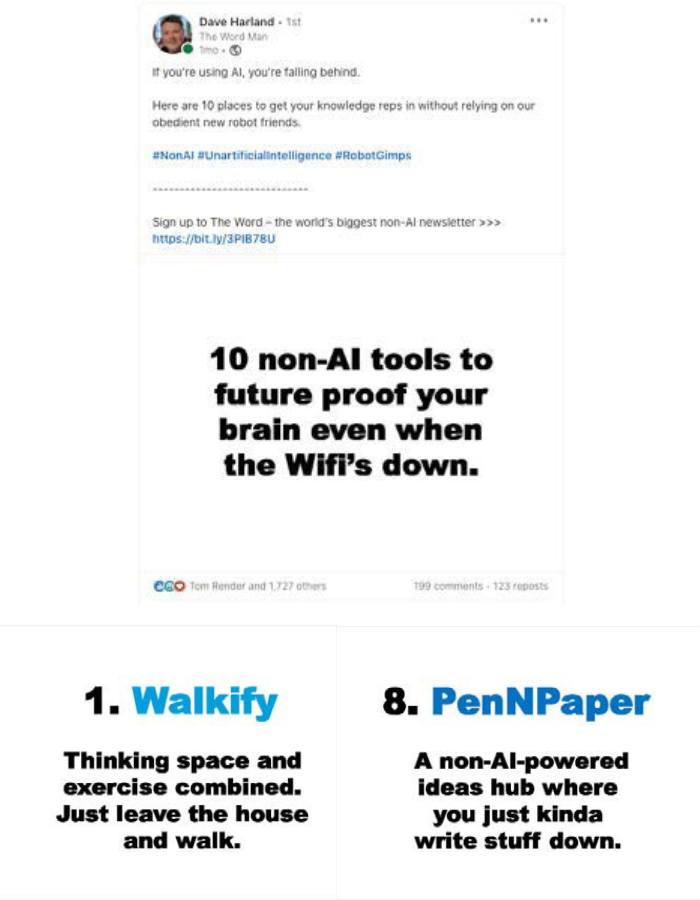
Why we love it:
Copywriter Dave Harland loves poking fun at the self-proclaimed thought leaders and trend-hoppers of LinkedIn. And his audience loves him for doing it.
This carousel post is a solid satire of the unfortunately still current trend of posting AI tips. Not only is it entertaining, it also positions AI writing tools (and those who espouse their benefits) as laughably inferior to Dave’s own services.
What you can learn from it:
Consider the alternatives to your product/ service – what could your audience use, buy or do instead of coming to you?
Now – how can you satirise those alternatives? Spoof product gags (like the 10 that Dave presents here) are a great option – but you can also do it through memes, dictionary definition gags and more. Look to BAM Monthly for readymade templates and inspiration.
crocs – the types of dad’s who wear crocs
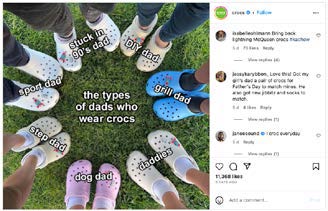
Why we love it:
Posted on Father’s Day, this has clear topical appeal. And while it’s not really a joke – thanks to the lo-fi meme aesthetic and the list of relatable references (i.e. Dad archetypes that the audience either are, or will recognise from their own father / fathers they know / pop culture), it feels like one.
What it is, in fact, is a smart way to shift the Limiting Belief, “Crocs are only worn by a certain type of person – and that’s not me”, instead demonstrating to their audience that “Crocs are for all kinds of people – including you”.
What you can learn from it:
Memes and other entertaining posts have huge potential to begin shifting the Limiting Beliefs that may be preventing your audience from buying from you. There are limitless ways to do this – but why not start by shameless stealing this one? ANY brand can pull off a “Types of X who Y” post – where X is a subset of your audience and Y is a behaviour you’d like to encourage. Plus, having honed your comedy chops with BAM Monthly, yours will be much funnier than the Crocs example.
icelandfoods – Keeping It Real with Iceland
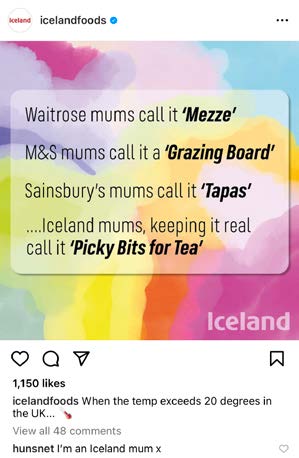
Why we love it:
The execution here isn’t 100% (our joke writers would have a thing or three to say about the flagrant disregard for comedic rhythm). However, in this comparison gag, Iceland manages to poke fun at rival supermarkets and those who shop at them in a brand-safe way.
In doing so, they not only position themselves as the go – to supermarket for shoppers who want to “keep it real” (not to mention save money versus buying a “grazing board”); they also trigger the Share and Declare effect, with commenters happy to have an opportunity to identify themselves as members of the Iceland Mums in – group.
(Quick note for those outside the UK: the emphasis on “mums” in the post is a reference to Iceland’s slogan, “That’s why mums go to Iceland.” But we agree, it’s not very 2023…)
What you can learn from it:
Whatever your niche, we guarantee there are multiple out – groups to your audience’s in-group. (For example, are your audience connoisseurs of fine coffee? Out-groups would include tea drinkers, and coffee drinkers who are happy with instant.)
Brands Against Mundanity Monthly templates guide you through the process of crafting jokes that poke fun at outgroup behaviour, even if you’re not a household name with rival brands that you can namecheck in your content.
Ryanair – From Ariel to Air Travel
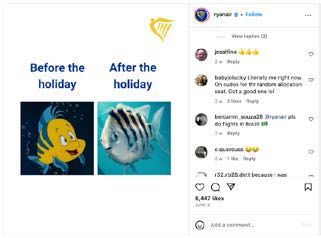
Why we love it:
In contrast to the other meme from RyanAir we’ve looked at in this issue, this one capitalises on a trending topic (the Little Mermaid remake, and the negative audience response to CGI Flounder).
What you can learn from it:
The “before X / after X” meme format is an easy and versatile one that any brand can use – either to entertain your audience by highlighting a Relatable Truth (as in the example), to subtly shift an audience belief and start moving them further along the buyer’s journey, or to directly showcase the positive impact of using your product/service. Just make sure you’re clear on which of those three objectives you’re trying to achieve, and bear it in mind as you create your meme. (Whether or not you do so via the medium of cartoon fish is entirely up to you.)
mountaindew – When Stock Photos Steal the Show
Why we love it:
Stock photos, paired with a brand-safe Relatable Truth, combined with a dash of topicality? That’s kinda our whole thing here at White Label Comedy (at least, it’s one of our whole things). This carousel from Mountain Dew is more meta than most brand’s memes – demonstrating that they’ve identified their audience’s preferred style of comedy and are happy to lean into it, hard.
What you can learn from it:
Adobe Stock and the other sites are full of evocative, topical images for every conceivable occasion – and thanks to Brands Against Mundanity Monthly, you’ve already got stacks of creative ways to use them in relatable memes.
While it’s tempting to try and stretch out your content by posting individual memes, consider grouping them into carousel posts on a given theme. The interactivity (i.e. swiping through) increases user dwell time, which tells the Instagram algorithm that your content is worth showing to more people.
Corporate Rebels – Flipping the hiring game
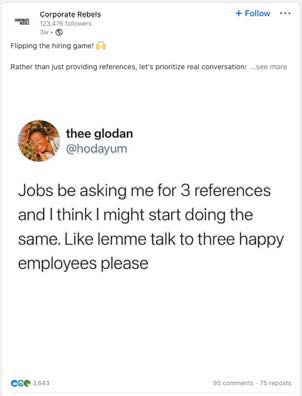
Why we love it:
Yes, LinkedIn is a ‘professional’ environment. No, content posted there doesn’t need to be sterile and grammatically flawless. Quite the opposite – when everyone else is posting identikit yawn fodder, showing even a little personality goes a long way.
Here, Corporate Rebels have borrowed a pre-existing tweet that aligns with their brand messaging, succinctly sums up a Relatable Truth they know will resonate with their audience, and just so happens to be written in an informal style that goes against the stuffy LinkedIn grain.
What you can learn from it:
If you’re struggling to generate enough personality packed content for yourself*, consider borrowing jokes and brand-safe relatable observations from other creators (with permission and/or giving credit, of course).
*Although you’re highly unlikely to ever feel stumped when you’ve got Brand Against Mundanity Monthly in your back pocket.
Doritos – The Sizzle of Summer
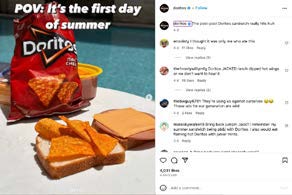
Why we love it:
Posted on the official first day of summer in the Northern Hemisphere – and during a heatwave in the UK – this couldn’t have been better timed.
Combine that topicality with a highly audience specific Relatable Truth, and Doritos have a scorcher of a post.
What you can learn from it:
As you can see from the comments, this isn’t just wishful thinking from the Doritos team – enjoying a Doritos sandwich in the summer is an experience that their audience genuinely relates to.
But before going ahead with your own version of this, consider your products/services. Are there any positive experiences associated with using them that would make thousands of people say “OMFG that’s so me”?
If you’re not already a household name like Doritos, the honest answer might be “no.” And that’s okay. Instead, focus your comedy content on Relatable Truths that are a little broader/adjacent to your offering (i.e. about your niche and the wider world of your audience). That way, you’ll get much more engagement – and when you do post about your offering directly, more potential customers will see it.
Ryanair – Embracing the Solo Throne

Why we love it:
The RyanAir team know that memes highlighting their audience’s Relatable Truths around holidays and flying (in this case an unexpected Small Joy) will always resonate with their audience more strongly than attempts to directly showcase the specific benefits of their offering in meme form (e.g. “When you realise you can fly to Majorca for less than £20”).
And of course, by reminding the audience of the Small Joys they may have experienced while flying in the past, they subtly stoke desire for the product anyway.
What you can learn from it:
When you’re picking an image for a relatable meme like this, the most important consideration is not whether it’s trending or uber-topical, a more evergreen pop culture reference (like this, from Amazon show The Boys), a stock image, or even your own photo…
No, the most important thing is that the image is emotive and clear. You want scrollers to be able to comprehend the meaning of the image in an instant, or the joke you’ve attached it to won’t land smoothly or on time (insert your own RyanAir joke here).
Greggs – Apple Vision Pro
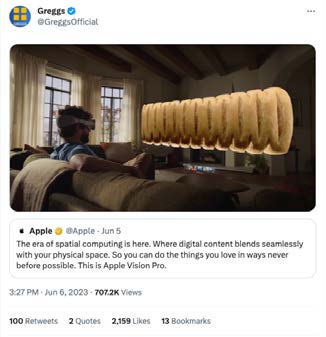
Why we love it:
What does the announcement of Apple Vision Pro – an upcoming ‘mixed reality headset’ – have to do with Greggs’ baked goods?
Absolutely nothing – but it had almost all of Twitter talking, and any good social media manager would want a slice of that action. This silly Photoshop inspired by Apple’s original tweet (“things you love in ways never before possible”) makes an instant visual impression – and reflects Greggs’ audience’s Relatable Truths around loving sausage rolls (and perhaps also wishing they were 1000x bigger).
What you can learn from it:
What does the announcement of Apple Vision Pro – an upcoming ‘mixed reality headset’ – have to do with Greggs’ baked goods?
Absolutely nothing – but it had almost all of Twitter talking, and any good social media manager would want a slice of that action. This silly Photoshop inspired by Apple’s original tweet (“things you love in ways never before possible”) makes an instant visual impression – and reflects Greggs’ audience’s Relatable Truths around loving sausage rolls (and perhaps also wishing they were 1000x bigger).
Yorkshire Tea – Biscuits Tier

Why we love it:
If there are two things that are sure to provoke engagement, it’s entertainment…
And controversy.
Here, Yorkshire Tea combines the two – taking a popular meme format, making it relevant to the world of their audience (who are all about tea, biscuits and cosy, rural British life) and encouraging “arguments” in the comments.
Of course, we’re hardly talking politics or religion here – so nobody is going to genuinely argue or take offence – but biscuits ARE a subject that Yorkshire Tea’s audience has strong opinions on (as shown by the comments) making it the perfect starting point for relatable content
What you can learn from it:
See how Yorkshire Tea followed up on the original post? Once you’ve gone to the effort of creating engagement driving content – especially a gamified format like this – it would be a wasted opportunity to simply post and walk away.
Get the ball rolling by ‘playing’ the game yourself in the comment section, and reward commenters’ attention by responding playfully. In turn, the algorithm will reward you with exponentially growing reach.
innocent – Productivity Graph
Why we love it:
Innocent Smoothies takes a set of relatable truths based around the realities of work right before a bank holiday – and turns them into a gag-packed timeline that stretches across a carousel.
What you can learn from it:
Relatable truths don’t always exist in isolation – often, they come in “sets” organised around specific moments, tasks or topics.
Playing around with posts that cover an entire set gives you more opportunities to make your audience laugh (and the additional “dwell time” as they scroll through the slides in a carousel post is great for fuelling the algorithm too).
PC Game Pass – Extra mouse buttons
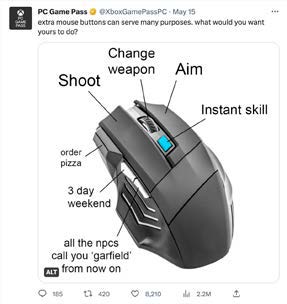
Why we love it:
Xbox Game Pass pretends to have added relatable desires as additional functions that can be triggered by this mouse.
Three of the desires are genuinely relatable, while the fourth isn’t relatable, but is deliciously surreal (which makes it the perfect ending to the list).
What you can learn from it:
The positive relatable truths (desires, small joys, daily delights) can often be harder to make jokes about – because those jokes are almost always less funny than ones based on the negative relatable truths (fears and pains).
But a post that assigns fun, funny functionality to an existing well-known product is a great opportunity to prove that rule of thumb wrong.
femalequotient – words keep me awake
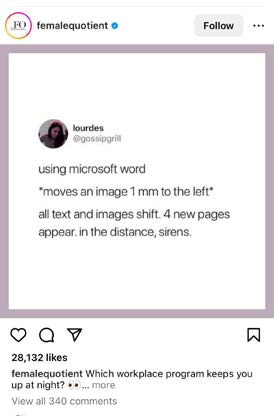
Why we love it:
Not every joke you make needs to be about a topic that’s only relatable to your specific audience.
This particular observation is so on the money, that it resonates with pretty much everyone (I haven’t used Microsoft Word for over a decade – and it still sent a shiver down my spine).
What you can learn from it:
Jokes that anyone would find funny should be used sparingly – after all, your aim with content like this is to show your specific audience that you understand them and their world.
But sometimes you land upon an observation or a relatable truth that’s so deliciously on the money – you can’t resist.
And when that happens – just roll with it.
National Trust – Rare and Fragile
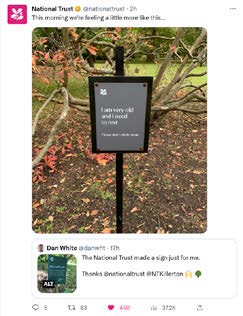
Why we love it:
Most brands focus all their energy into their original content – leaving audience interaction to a separate Community Management team who are mostly there to deliver copy-and-paste responses to questions and complaints.
The National Trust, though, have given their team much more freedom: allowing them to go all out when engaging with their audience.
By applying the “Yes And” improv principle they’ve taken a funny post from a fan (pretending the “Rare and Fragile” signage refers to them not the tree), and taken it to the next level with their own Photoshopped response.
What you can learn from it:
When you get into the habit of celebrating your audience’s interactions – sometimes they’ll write the jokes for you.
But when that happens, don’t let the conversation end there. “Yes And” their post with your own take and your audience will love you for it.
Ryanair – “cha cha cha”
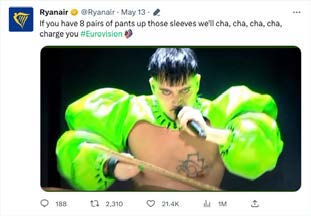
Why we love it:
Ryanair are great at jumping on board a trending topic – and spinning it around so that their take on it fits perfectly into the Ryanair world.
Here, they’ve taken the meme that arose from Finland’s Eurovision entry (“cha cha cha”) and connected the dots between the lyrics, and a relatable pain (something Ryanair’s audience love to hate).
What you can learn from it:
With the right treatment, you can make ANYTHING about you and your audience.
And yes – mostly, you do it by cleverly linking topics. But as Ryanair have shown, you can also make it work just by playing around with word sounds too.
Specsavers – Click Here
Why we love it:
It’s not often we’ll praise a brand for not telling a joke, let alone policing jokes told by others. But we thoroughly agree with Specsavers on this one. And by delivering this important message in a fun, meta way, they got a spike in engagement that meant it reached more people.
What you can learn from it:
Whenever you write a joke, take a beat to interrogate and safety check it. Is there a ‘target’, and if so, who is it? Are you punching up, or down? Who will get the joke? Who are you excluding from getting it? There are no correct answers to these questions – it’s just about identifying (and checking you’re happy with) how your content could potentially be perceived by your audience before you hit post.
jacksflightclub – The Seat Lottery

Why we love it:
Jacks Flight Club have paired one of their audience’s Relatable Truths (we’d call it a Small Joy, if you want to get specific) with the oft-used image of Robert Downey Jr looking relieved. It’s not complicated. At all. And yet it’s highly effective.
What you can learn from it:
The reason this one flew *ahem* is that 12,000 people strongly related to having had (or wishing they could have) the feeling communicated by the meme. It’s easy to get swept up in the fun of creating funny content, but every time you make a meme, ask yourself:
What am I communicating here? Is the message of this joke so strongly relatable that thousands of people would respond “yes, that’s so true”?
If your answers are “I don’t know” and “probably not”, your meme probably isn’t as funny as you think it is.
transempowermentproject – Things trans people say
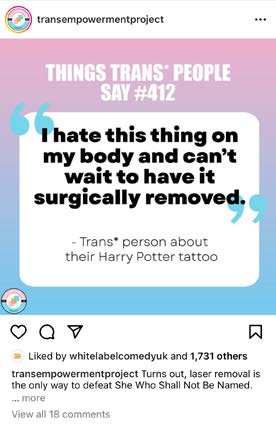
Why we love it:
We love to see our clients getting results! (Especially with the content we’ve created for them.) But even putting our heavy bias aside, at first glance this looks like a gag that only an A-List comedy writer could come up with.
And yet…
What you can learn from it:
Firstly, you’ll often get templates for “quote”-type jokes in brands Against Mundanity. But we’ll let you into the secret of creating one like this from scratch…
All you need to do is identify a recurring character in your audience’s life (could be themselves). Now write something evocative they might say. Aim for a statement that heavily implies one meaning – but has the potential to be misunderstood or actually mean something else. Then, in the quote attribution, give the surprising alternative context / meaning of the quote. That’s your punchline.
runna_coach – Expectations vs. Reality
Why we love it:
Runna is a new brand on our radar, thanks to this ‘meme dump’ Instagram carousel timed to coincide with the London marathon. After all, why tell one topical brand-safe joke when you can tell five?
What you can learn from it:
The algorithm favours carousel posts at the moment – so you’ll likely get more engagement on posts in this format than videos or single images. But it can be hard to know how to fill them out. Well – Brands Against Mundanity Monthly helps you write an endless stream of jokes, so try grouping them into ‘sets’ (i.e. 3+ jokes that feel like they play in a similar territory, either in terms
of topicality or your audience’s relatable truths) and posting them together.
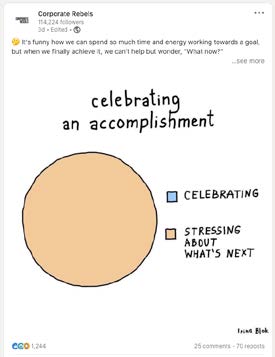
Corporate Rebels – Celebrating an accomplishment
Why we love it:
Corporate Rebels consistently drive engagement on LinkedIn with graph gags that speak to their audience’s relatable truths, and here’s another strikingly simple-but-effective example.
What you can learn from it:
Aside from “graph gags are awesome and you should be posting them on EVERY platform – but especially LinkedIn”…
You can swipe this joke format directly. Simply swap out the title for a situation your audience can relate to (e.g. creating content). Then, in the key, label the non-existent segment as what your audience desires in that situation (e.g. creating killer content) – and the entire pie as the relatable pain your audience actually experiences (e.g. staring out the window feeling stuck).
Corporate Rebels – The Ageless Career Revolution
Why we love it:
Brands Against Mundanity Monthly subscribers will know – we love a bar chart gag. And this is a fine example from Corporate Rebels on LinkedIn, which uses a simple punchline to make a clear point that, of course, supports the brand’s marketing objectives (to encourage lifelong careerfocused learning via their books and courses). It’s Belief Shifting content at its finest.
What you can learn from it:
The bar chart templates in BAMM give you everything you need to create relatable, engagement-driving posts – but graph gags are also a fantastic Belief Shifting format (we create them for our clients all the time). Consider how you might adapt the BAMM bar charts – or even this one – to not just make a joke, but a point. It might take some effort and experimentation, but the flood of engagement – and sales – will be worth it.
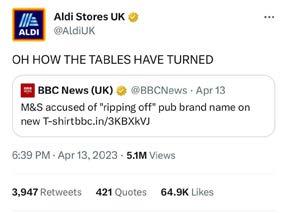
Aldi Stores UK – The Art of Brand Beef
Why we love it:
Aldi has perfected the art of brand beef on Twitter. The supermarket has previously been on the receiving end of legal action from rival M&S due to… erm… ‘similarities’ between some of their products – but rather than hide this skeleton in their closet, Aldi mines it for comedy content on social. (A strategy that we fully condone here at White Label Comedy, and recently embraced on behalf of our client, Fray Bentos.)
Here, Aldi saw the perfect opportunity to have a direct pop at M&S – and they enjoyed a massive spike in engagement.
What you can learn from it:
Much like the other Aldi post in this month’s Swipe File, this just goes to show the importance of actively spending time on the social platforms, following industry news, and honing your brandsafe comedy chops – so that when an opportunity arises, you know exactly how to react.
But beyond that, here’s a more philosophical point to ponder… What if, instead of hiding your brand’s flaws, you owned up to them – and even joked about them? Done right, you might just find it makes you more attractive to your potential customers.
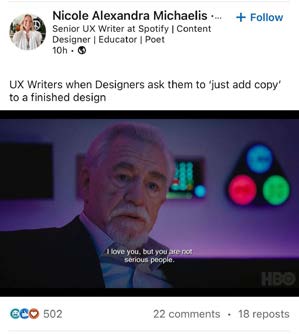
Nicole Alexandra Michaelis – Copy Meets Design
Why we love it:
Here we’ve got another LinkedIn marketer taking advantage of the relative rarity of memes on the platform – once again using the format to present one of her audience’s relatable pains. But what we love most here is that Nicole posted this still from Succession shortly after the episode first aired, when it was a hot topic of conversation on social media – thereby combining relatability and topicality which, as we know, is a potent recipe for engagement.
What you can learn from it:
As a comedy connoisseur, you really should be watching Succession…
But also, don’t be afraid to post memes on LinkedIn. There’s a real opportunity here at the moment, to become a standout voice by going against the outdated, so-called ‘rules’ of what’s appropriate on certain platforms (always in a brand-safe way, of course). And if you don’t see your competitors posting of-the-moment pop culture references like this? That’s all the more reason to consider it.
Ari Murray – Budgeting Gone Wild

Why we love it:
Memes are still a relatively rare sight on LinkedIn – which is why, when they’re executed well, they have a strong chance of going viral. (In fact – we recently scored more than 1.5 million impressions with one, which you can check out in Issue 6.) This meme jumps off the feed – your average LikedIn user won’t expect to see stills from reality TV shows, so it’ll stop their scroll when they do – and it speaks very clearly to a powerful Relatable Fear / Confession held by Ari’s audience.
What you can learn from it:
We didn’t initially recognise the guy in the photo, and you don’t need to. Because the important thing here is his emotive facial expression – that middle-distance stare that screams, “I just realised I’ve made a terrible mistake”. When you’re choosing images for your BAMM memes, pick the clearest and most evocative image you can find that fits the prompt. Ask yourself “What does this image say?” and “Does it say it clearly, with no room for misinterpretation?” That way you’ll end up with stronger jokes that your entire audience is guaranteed to ‘get’.
alexa99uk – Alexa’s Hidden Talent
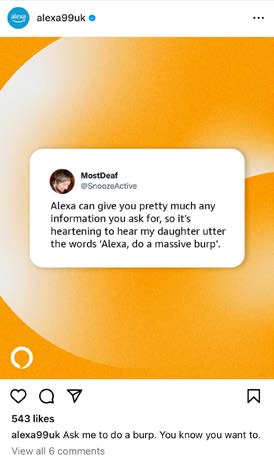
Why we love it:
This is comedy content creation at its laziest – letting your audience write the jokes for you. Here, Alexa UK have found funny UGC (User Generated Content) out in the wild, that speaks to one of their audience’s Relatable Truths (“My kids interact with Alexa in unexpected ways”). All that remained was to give it the minimumeffort ‘screenshot on a branded background’ treatment, and they had a solid post that ended up outperforming many of their original gags.
What you can learn from it:
If you’re fortunate enough to have customers who post about your products or services, you should absolutely be re-sharing that content. Whether it includes comedy or not, social proof like this is worth its weight in gold when it comes to turning your social media audience into paying customers.
And if you’re not yet rolling in tweets about your products? Gather social proof from other places (reviews, testimonials, thank you emails from happy customers), turn it into quick-and-easy social content in a similar style to this example, ideally add a layer of humour to the creative or the post copy, and get sharing.
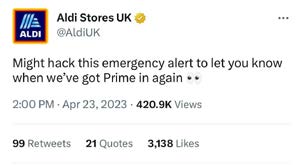
Aldi Stores UK – Emergency Alert Hacked
Why we love it:
Think about the ‘myths’ your audience might currently believe – the Objections and Limiting Beliefs that could be making them hesitant to buy your products – and consider how you can dispel those with succinct, single slide ‘lessons’. In other words, present the facts that combat your audience’s potential misconceptions.
Combine a couple of these with relevant jokes from BAMM (e.g. a meme after every myth), and all of a sudden you’ll have yourself a 10-slide carousel post that not only puts you in the algorithm’s good books – but also actively moves your audience close to buying from you.
What you can learn from it:
You don’t always have to write fully fledged jokes to have a chance at going viral. Timing is (almost) everything, and finding simple, brand-safe ways to insert yourself into the conversations that are already happening on social media can often deliver greater engagement than the posts you painstakingly planned months in advance. Which is why training yourself to be reactive – or hiring a reactive socials team to do it for you – is such a worthwhile investment.
washingtonpost – 7 Myths About Cooking with Salt
Why we love it:
It’s not funny, but it is a beautifully executed and informative Instagram carousel, which takes advantage of the fact that the algorithm currently prioritises carousels that use most or all of the available slides (to a maximum of ten). For this reason, it’s a format we’d like to see more brands experimenting with – especially if they can combine information with entertainment.
What you can learn from it:
Think about the ‘myths’ your audience might currently believe – the Objections and Limiting Beliefs that could be making them hesitant to buy your products – and consider how you can dispel those with succinct, single slide ‘lessons’. In other words, present the facts that combat your audience’s potential misconceptions.
Combine a couple of these with relevant jokes from BAMM (e.g. a meme after every myth), and all of a sudden you’ll have yourself a 10-slide carousel post that not only puts you in the algorithm’s good books – but also actively moves your audience close to buying from you.
LEGO – The Legend of the WFH Friend at 2 PM
Why we love it:
In this recurring meme series, LEGO have found a way to showcase their products in the context of genuinely funny content – which has far more chance of going viral than straight-up product photos ever would.
What you can learn from it:
The reason this meme works isn’t because “everyone likes LEGO”. It’s because it’s expressing a Relatable Truth. As long as you prioritise relatability, you too can create memes that feature your stuff without compromising the comedy.
Try following the image prompts included with the BAMM meme templates to create an original image that fits the brief and features a product you’d like to promote. Like subtle product placement in TV shows, it needn’t be the focal point – you could even just pop the product on a shelf in the background. That way, you still get to share your Instagram shopping link – but the post has a genuine shot at organic reach.
Ryanair – Gary is a liar
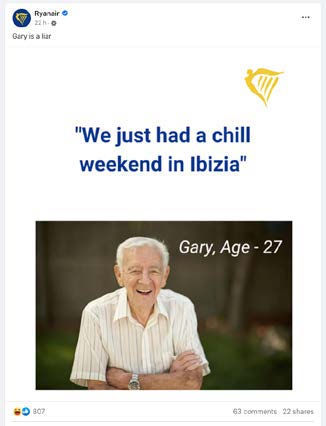
Why we love it:
When we write and edit jokes, we obsess over the ‘leap’ we’re asking an audience to make. If the link between setup and punchline is too straightforward, i.e. only a small leap, there’s no surprise and the joke won’t be funny. But if the leap is too big, most of your audience won’t get the joke. Here, RyanAir created just enough distance for the audience to leap from the setup (an ironic statement about an island famed for its party culture) to the punchline (a man who’s aged beyond his years), making this a properly satisfying gag.
What you can learn from it:
This is a widely used joke format that can easily be adapted for any brand. Simply swap the quote out an ironic statement about something that might prematurely age your audience (e.g. “Training for the marathon wasn’t as hard as I expected”) then recreate the punchline by labelling a photo of an elderly person as a young person. Done.
The Marketing Millennials – 17 Views and a Sigh
Why we love it:
Here we see perhaps the silliest form of graph gag in action – the ‘single answer’ pie chart. This one works not just because it subverts our expectation that a pie chart is usually composed of multiple segments, but also because it expresses a Relatable Pain that clearly resonates with the Marketing Millennials’ audience: “I spend hours on content, only for it to flop.” Ironically, we imagine this post took minutes to create, at most…
What you can learn from it:
Graph gags go down a storm on LinkedIn, where audiences are used to seeing visualisations of data – meaning there’s a readymade expectation for you to subvert when your data turns out to be a joke. You can use the graph gag formats you get in Brands Against Mundanity Monthly, as well as experiment with silly, ‘single answer’ pie chart gags like this.
Adam Hunt – From Laughs to Leads
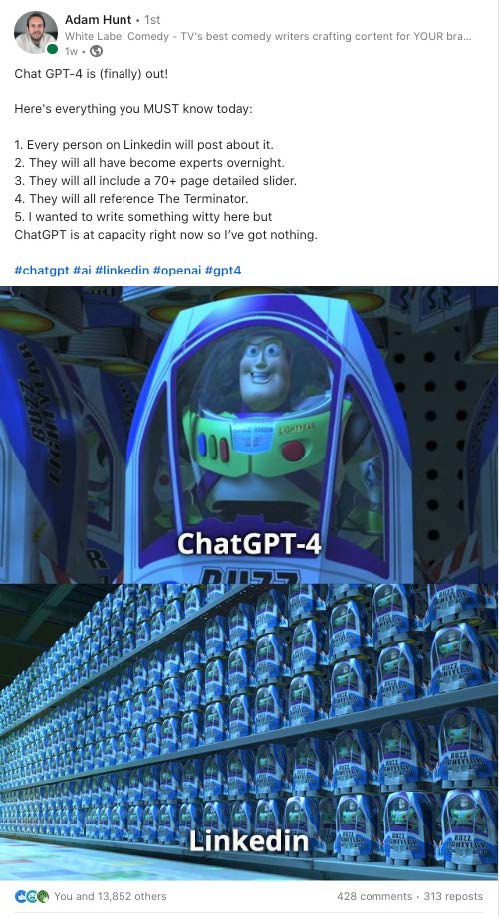
Why we love it:
We wrote it! Look closer, see – that’s Adam Hunt from White Label Comedy. (No, not Buzz Lightyear. Above that.) This was our top LinkedIn post for the month, bringing in more than 1.5 million impressions, 13k likes, 400 comments, 1.2k new followers and – most importantly – 126 new leads.
What you can learn from it:
Aside from “hire White Label Comedy”? Oh, OK then…
Firstly, don’t be afraid to combine joke formats in a single post. Here we’ve got a self-contained meme, PLUS a joke list in the post copy. Combining the two gave this post broader appeal than either element in isolation -with the comments highlighting that some people engaged because they found the meme most entertaining, while others related strongly to specific lines from the copy.
Secondly, join the conversations your audience is already having. What’s the hot topic of today? If you can make a witty observation about it (that your audience agrees with), you’re likely to go viral for all the right reasons.
jacksflightclub – The Epic Battle of Priorities!
Why we love it:
The air travel industry has a strong track record when it comes to comedy on social media, spearheaded by RyanAir – so it’s great to see Jacks Flight Club getting in on the action. This one’s not so much a joke as a pithily expressed relatable truth – but you can expect to see their memes in a future Swipe File!
What you can learn from it:
Sometimes all it takes is a sentiment that your audience strongly relates to, succinctly stated, and presented on a simple brand-relevant background. And when you mix pure relatability posts like this in with the out-and-out comedy content you make using BAMM, your engagement is sure to… ahem… take off.
Dave Harland – COPYFEST
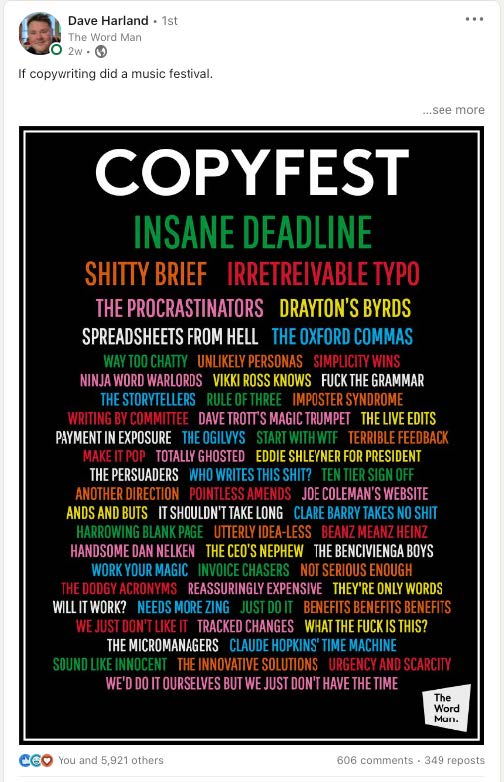
Why we love it:
Dave’s done it again – dropping this spoof Glastonbury festival poster packed with copywriters’ relatable truths, on the same day the real Glasto lineup was trending. Oh, and bonus points for the meta joke in “irretreivable typo”. *chef’s kiss*
What you can learn from it:
Keep a living document full of your audience’s relatable truths, adding to it as and when you discover new ones. Here at White Label Comedy, we create a full-on Relatability Matrix for our clients. But yours doesn’t have to be so comprehensive. Just keep a list that you can use both as a quick reference guide for filling in the blanks in your BAMM templates, AND draw from if you want to go all out on a headline piece of content like Dave’s Copyfest poster.
alexa99uk – The Welsh Way of Saying it All
Why we love it:
Weird design choice where they’ve tried to make a pie chart look like an Echo speaker aside… this is a solid, scroll-stopping graph gag that uses the audience’s nationality as the starting point for broadappeal relatability. Those who are Welsh will relate to having heard these phrases, while people of other nationalities in the UK will happily admit to having said them.
What you can learn from it:
Why not steal the title format for your own pie chart? “What People Say When I’m X”, (where X = your audience). Now all you have to do is populate the pie segments with 3-5 phrases that your audience will have heard often. Although a word of warning: steer clear of anything around nationality / ethnicity / religion, unless you are 110% confident you’re not being offensive!
Razer – I have no money because I spend it all on games
Why we love it:
It’s a twist on a popular meme that Razer knows their (extremely online) audience will be familiar with. Usually, both ‘pills’ offered in this meme are labelled with equally attractive options – but here, one of them is a relatable pain that this audience are happy to acknowledge (“I have no money because I spend it all on games”).
What you can learn from it:
Subverting an established meme is a great wayto show your audience that not only do you understand them and their relatable truths – you’re also an expert in the memes they know and love. Just make sure you definitely know the ‘rules’ of your chosen meme before you intentionally break them! If in doubt, do your homework on the Meming Wiki.
(Or, you know, just stick to the rock solid, ready-topost memes you get in your BAMM subscription.)
Dave Harland – Linkedin Whiners Unite
Why we love it:
It’s another tight meta one-liner from The Word Man, Dave Harland. But importantly, it’s not just smart for smart’s sake – there’s a relatable truth at its core.
What you can learn from it:
Trim your jokes. Then trim them again. And again. Until there are almost no words left. (At which point, you may have removed too much – so check it still makes sense.)
Lucozade Energy – Cheaper than a flight to Barbados
Why we love it:
Alright, so technically it’s an ad – and it’s more of a witty strapline than a joke – but this one successfully stopped our scroll. Why? Because we needed a beat to mentally unpack that strapline: “Cheaper than a flight to Barbados”. It’s undeniably true, it tapped into a pain we felt in the moment (“I’m in cold, wet England and I wish I was on holiday”) and the connotation is that, like a Barbados holiday, this drink will rejuvenate us.
What you can learn from it:
Adverts and social posts don’t have to list your products’ features, or even their benefits. You’re much more likely to catch your ideal customers’ attention if you surprise them with a joke – then let their curiosity lead them to learn more about the specifics of your product.
Napolina – Overheard in Naples
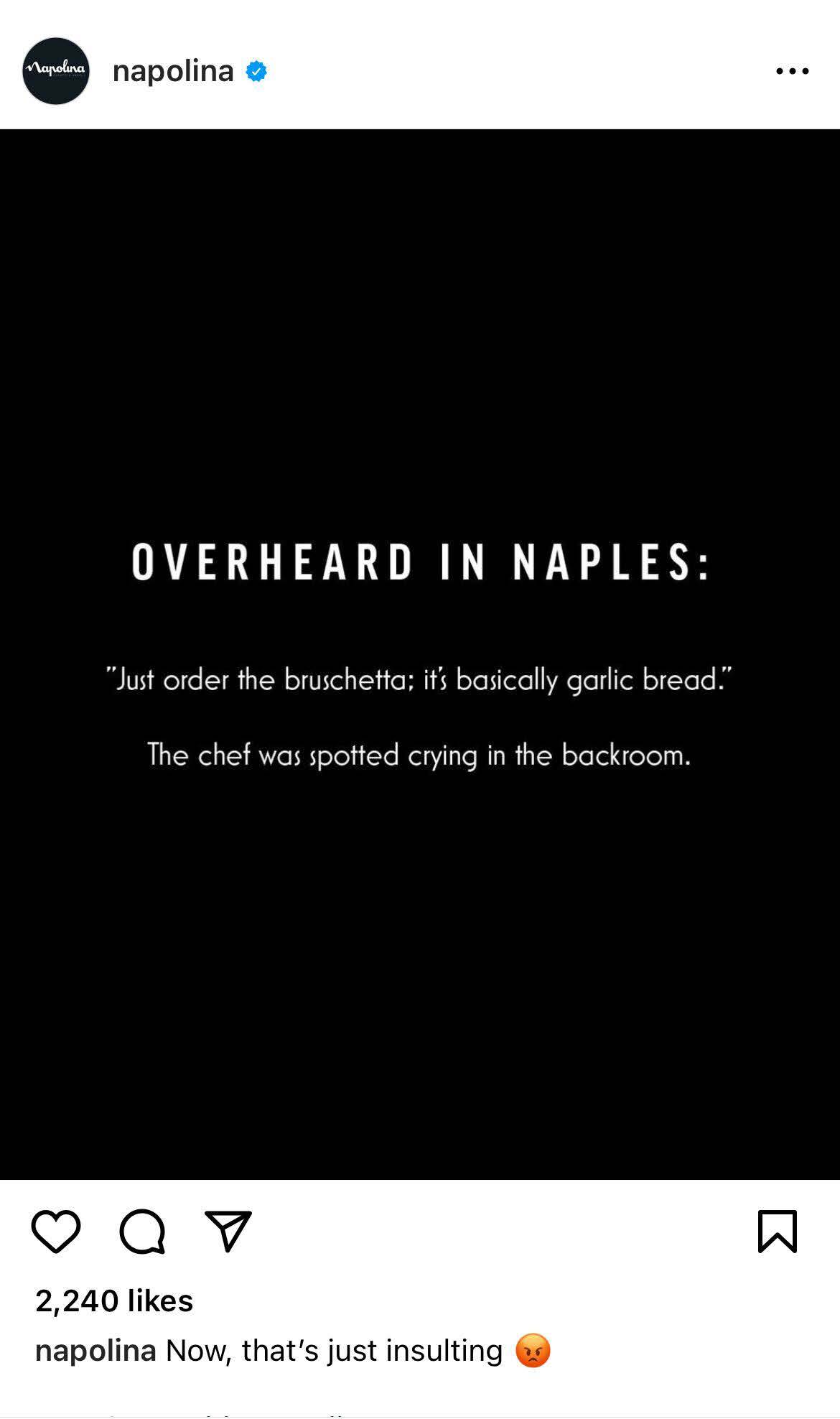
Why we love it:
Napolina haven’t crossed our radar before, but we’re impressed by their recent experiments on social – especially this ‘Overheard in Naples’ series, clearly inspired by the longstanding Instagram accounts @OverheardLa, @OverheardNewYork and their many spin-offs.
What you can learn from it:
For every style of joke you enjoy, there’s nearly ALWAYS a way to craft a brand-safe version that’s relatable for your audience. Of course, your BAMM templates and this Swipe File do the hard work for you. But try to take a mental note of other jokes you could mimic, when you spot them in the wild – whether they’re from a meme account, a comedian, a TV show, or your pal down the pub. It’s all valid inspiration.
lego – Marching into Fun
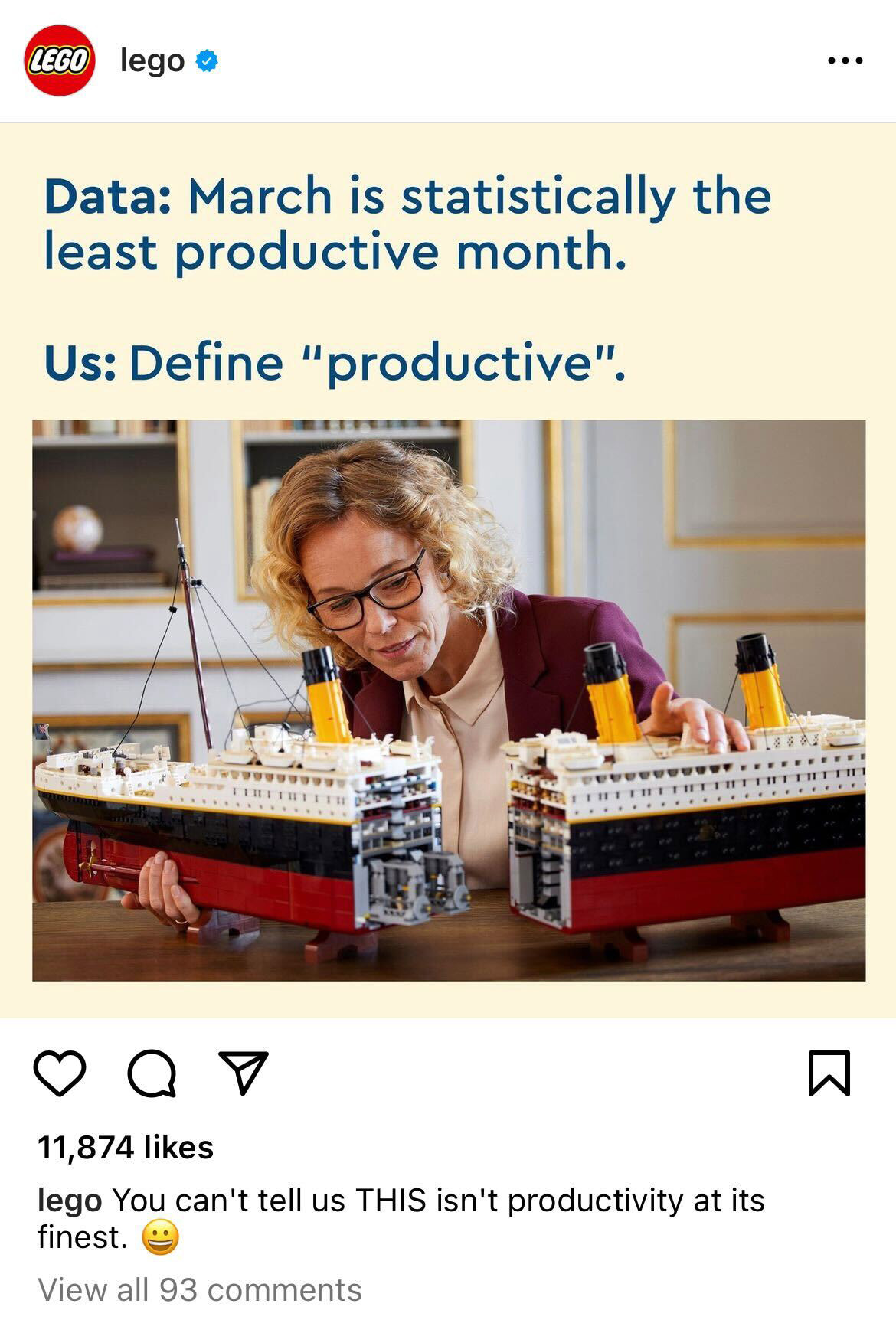
Why we love it:
By using a fact about March as a jumping off point, Lego were able to make a joke about their products (and the way their audience enjoys them) that feels timely and justified.
What you can learn from it:
Brands Against Mundanity Monthly is full of joke formats like this – so keep using them! Once you’ve got the hang of each template, try putting your own spin on it (perhaps by swapping out part of the punchline for an image, like Lego did here). You might end up with a totally new joke that you prefer – or even two versions different enough that you can post both.
Flexa Careers – RIP 5-day week
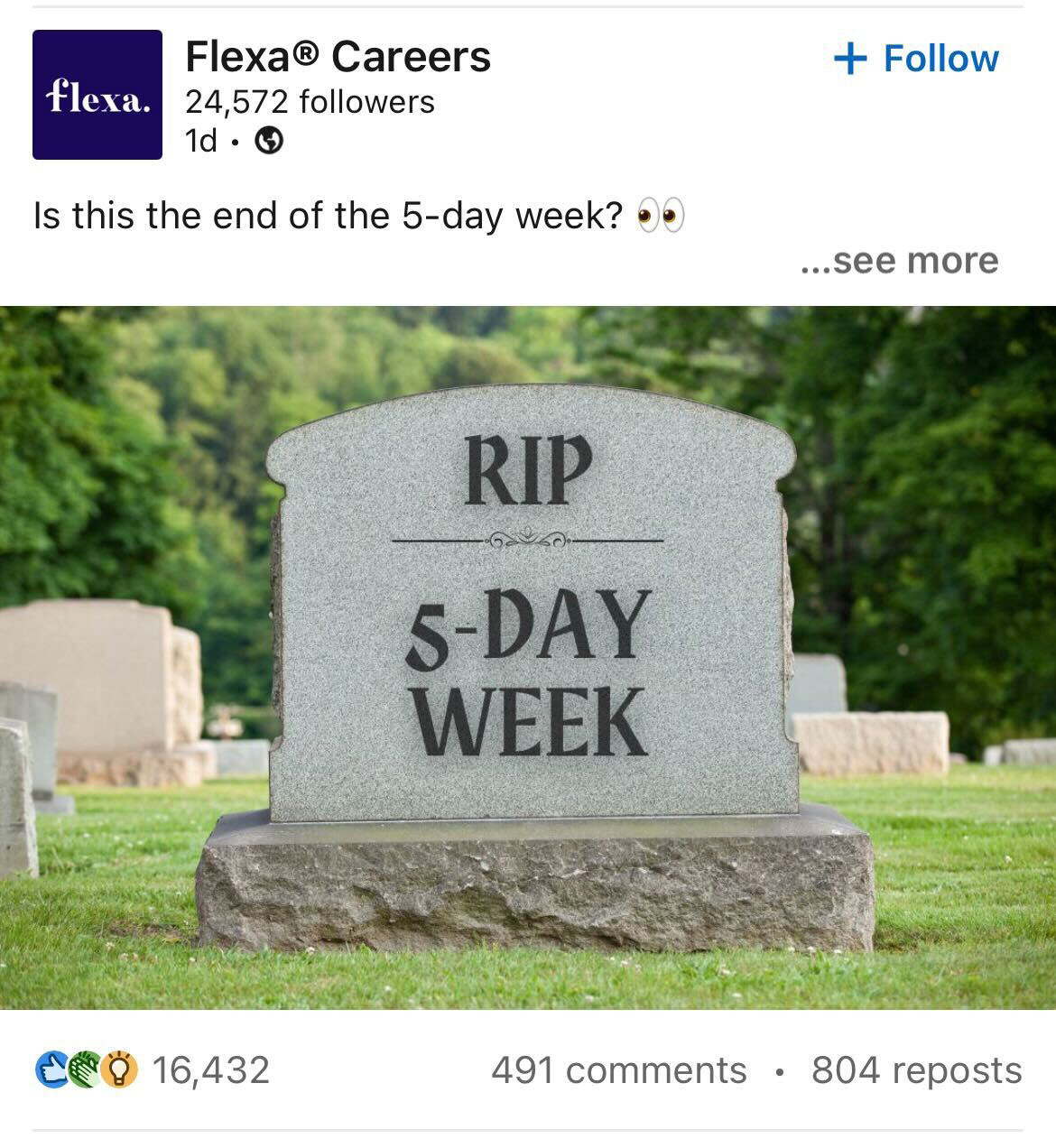
Why we love it:
It’s not quite a joke – but it is a creative, scrollstopping way of presenting a bold and potentially provocative statement, captioned with an engagement-driving question. Plus – the potential looming demise of the 5-day work week is something that everyone in Flexa Careers’ audience is talking about right now.
What you can learn from it:
What’s ‘dead’ (outdated, or soon-to-be replaced) in your niche? Consider sticking it on a gravestone to make a bold statement! You can also steal the idea of captioning ANY joke image with a relevant, simple (and even potentially divisive) question, to provoke algorithm-boosting conversation in your comments section.
Fray Bentos Official – Nostalgic Nonsense
Why we love it:
Fray Bentos use a topical news story (classic sitcom Fawlty Towers is coming back to our screens) as a jumping off point for a nostalgia-fest that got their audience engaging en-masse.
What you can learn from it:
You don’t need to emulate the biting satire of a panel show, or the aggressive “jokes” of RyanAir, to add topicality to your content. There are loads of light-touch ways to turn those watercooler topics into something brand-relevant (and brand-safe) instead.
Fray Bentos Official – don’t feed the trolls
Why we love it:
Fray Bentos have taken something they’re normally criticised for – having tins that some people struggle to get into – and had fun with it. This parody of an airline safety information card teaching us how not to open our tins landed safely at its destination.
What you can learn from it:
They say “don’t feed the trolls” – but sometimes it’s the best thing to do. If there’s one thing everyone already believes about your brand or business – don’t bury your head in the sand, instead lean into it, and you might find the audience leans in with you.
Fray Bentos Official – COMPETITION TIME
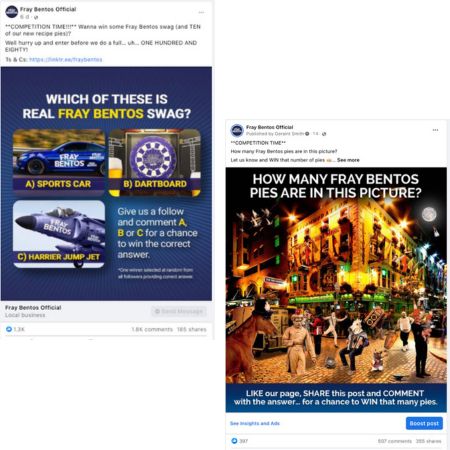
Why we love it:
Giveaways can be a great way to grow your audience on social – but they’re often awkward, eggy and bland. These two from pie brand Fray Bentos completely buck that trend – yes, we’re trying to grow an audience, but we’re going to make sure we’re entertaining and engaging while we do it.
What you can learn from it:
If you want people to follow you, it helps to incentivise them in some way. Sometimes that incentive is “because our content is awesome”, other times it’s “because I might give you a dartboard”. In either case – entertainment value wins the day.
Paddy Power – Woke up like this
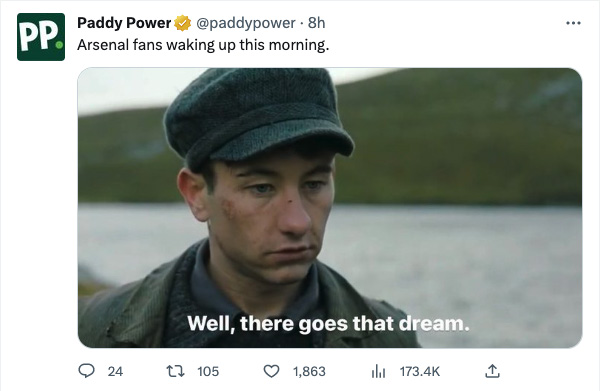
Why we love it:
Paddy Power are total pros when it comes to clashing multiple topical ingredients into a single piece of comedy content. This came the morning after an Arsenal defeat AND at a time when the world was talking about Oscar winner Banshees of Inisherin (which this image is from).
What you can learn from it:
In Brands Against Mundanity Monthly, we give you meme formats that work perfectly well with royalty free images. But you can also experiment with making the same gags using trending pop culture images – just make sure the expression, emotion or sentiment conveyed by the image matches what we’ve suggested in the prompt.
Aldi Stores UK – Battle of the Brands
Why we love it:
There’s a longstanding feud between Aldi and M&S – largely due to Aldi’s habit of ‘borrowing’ other brands’ trademarked product ideas. But here, the tables have turned and Aldi is pulling no punches with a comedy roast-type response. (They probably won’t actually sue, but that engagement is worth its weight in gold.)
What you can learn from it:
Notice how Aldi’s joke is succinct – yet includes just enough contextual information that even someone who wasn’t previously aware that M&S had sued them over a gin can ‘get’ the joke. Edit your jokes to strike a balance between providing enough context for a clear setup, without making it so obvious that you lose the element of surprise.
SURREAL – Top Cereal Launch 2022
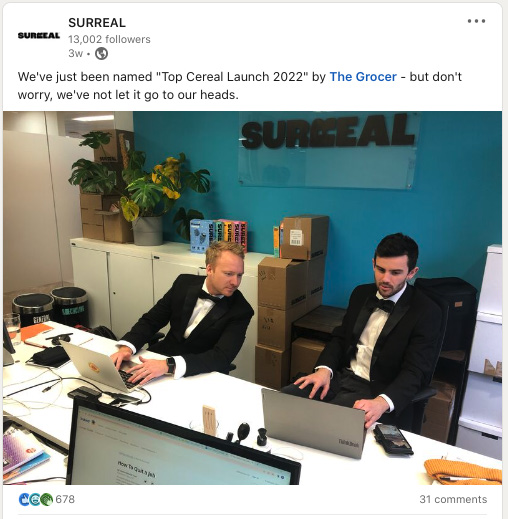
Why we love it:
We’re sick of seeing bland, self-aggrandising ‘announcement posts’. Here, SURREAL found a way to show off the fact they’d won an industry award, while maintaining their trademark silliness – which ensures the achievement they want to boast about actually gets seen and engaged with, rather than totally ignored like 99% of the “I’m delighted to announce…” chaff we see on LinkedIn.
What you can learn from it:
When you need to announce something to your audience, remember that you still need to entertain them. You can do this by punching up your post copy with a witty aside or two (send us an email if you need a hand with that) – or go the whole hog and create an intriguing, delightfully silly ‘behind the scenes’ image like this one.
Domino’s Pizza UK – Food Wars
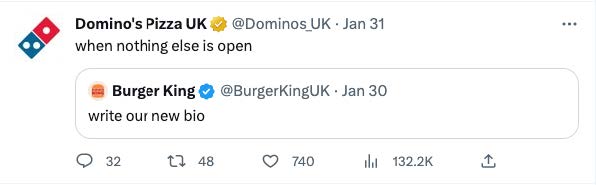
Why we love it:
Domino’s don’t currently get masses of engagement on Twitter, so this is great going by their standards. A rival brand gave them an open goal, they plucked out the perfect five word retort, and they scored.
What you can learn from it:
You may not have ‘rivals’ as such, and even if you do, it may not be appropriate for you to publicly roast them. But big household name brands post engagement driving ‘games’ like this all the time. Replying or retweeting with a touch of brand safe sass is a great way to hone your comedy chops, and potentially get noticed by their massive audiences – a proportion of whom will inevitably also be your ideal customers.
LawFinder.at – The Case of the Artificial Attorney
Why we love it:
At first glance, this doesn’t look like comedy content – especially to an audience who, at this point, are very used to seeing dull AF ‘thought leadership’ posts about AI on LinkedIn. This only adds to the surprise and delight of realising this is actually a tight one-liner gag, about a pain that the audience will strongly relate to.
What you can learn from it:
AI is a hot topic right now. So why not try reversioning this very gag for your own audience? Here, we’ll even give you a Brands Against Mundanity prompt version: “To replace [X] with artificial intelligence, [Y] will have to [Z]. No chance.”
2000 AD Comics – Judge Death
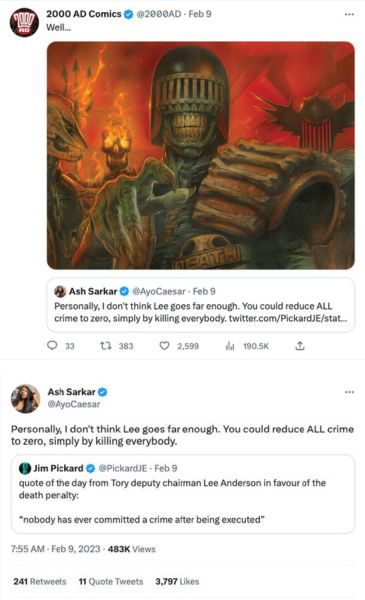
Why we love it:
Those unfamiliar with 2000 AD Comics won’t fully ‘get’ this one. But their audience absolutely did, and that’s what matters. In just one word and one image of their character ‘Judge Death’, they managed to jump on a trending political conversation in a way that felt brand-safe… even though it was about the death penalty.
What you can learn from it:
Two things. Firstly, if you’re not actively spending time on social platforms – other than to post your pre-prepared content – you’re missing out on golden opportunities to join trending conversations. And secondly, the only audience that matters is your audience. Don’t be afraid to create content that only the nerds of your niche will ‘get’.
Natasha Rose Griggs – Work for Free
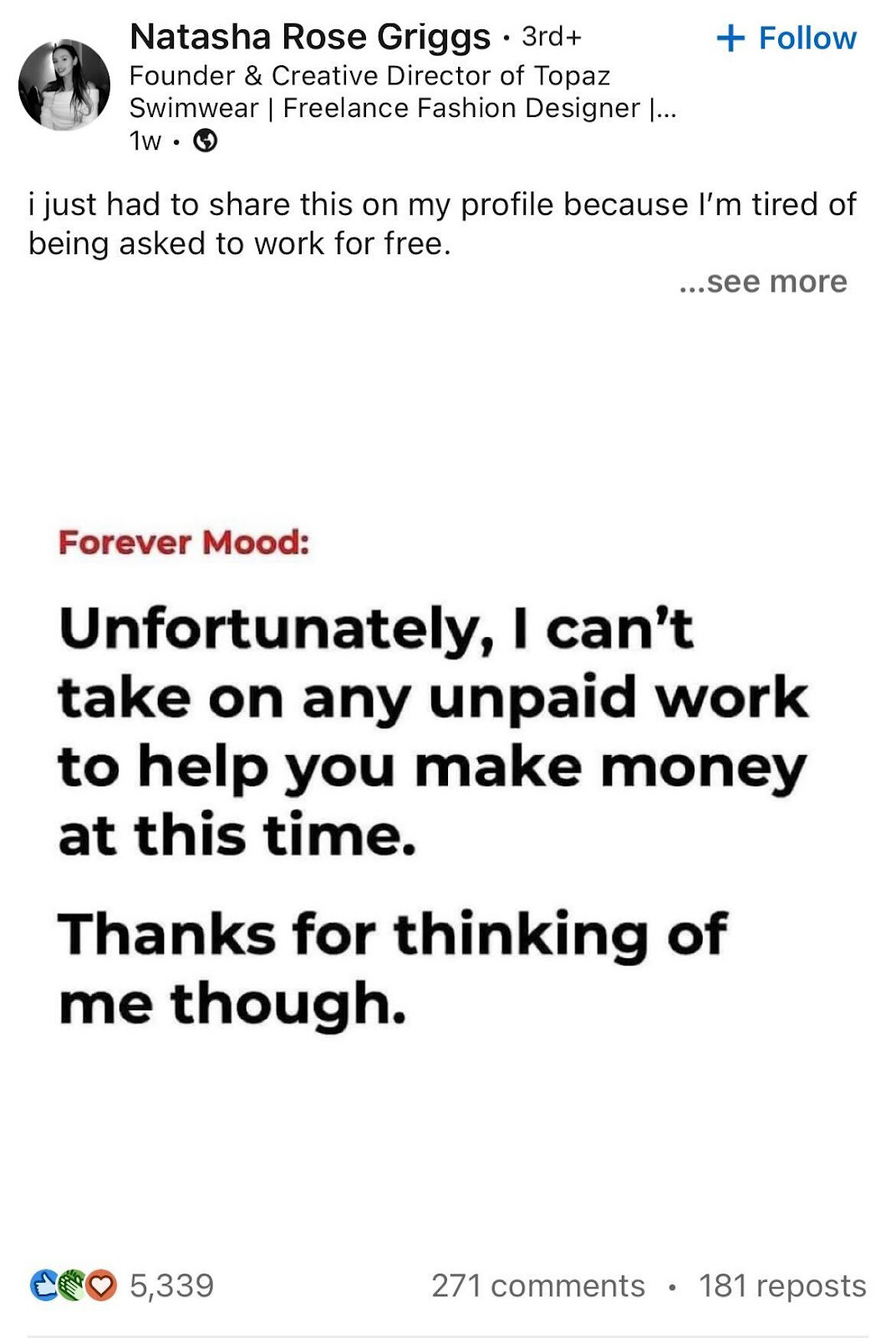
Why we love it:
It’s sassy, sarcastic and above all, it’s relatable. And on LinkedIn – the very platform where Natasha and her audience are likely receiving frequent requests to work for free, from people who will also see this post – it’s a bold attempt to re educate a misbehaving out-group.
What you can learn from it:
You don’t always have to write a ‘proper joke’ to convey a relatable truth. If it’s something that your audience relates strongly enough to, ust spelling it out clearly (with an optional dash of sarcasm) will drive engagement.
SURREAL – Don’t Change Your Life
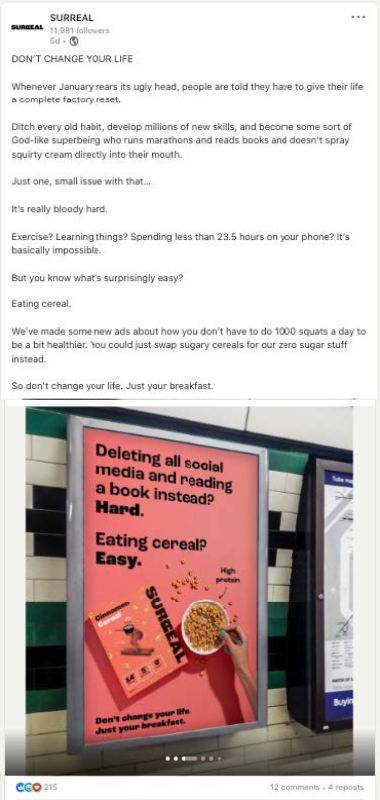
Why we love it:
Surreal posts a lot of delightfully silly Entertain content. But here’s a solid, seasonally topical Teach post designed to engage their LinkedIn audience AND shift a Limiting Belief that might be stopping them from considering Surreal’s products: “Making healthy lifestyle changes is incredibly hard work.”
What you can learn from it:
You’re already producing seasonally relevant content, thanks to BAM Monthly. But for every joke you write that references the January blues, the clocks changing or the stresses of Christmas and so on… consider whether that seasonal hook might also be the ideal starting point for a more substantial piece of Teach content. That’s content that helps your audience overcome one of their false beliefs — about your product, brand, industry, or even themselves — and therefore drives them towards the sale. (Hint: you get a free bonus Teach template every month, so look to those for more inspiration!)
Monzo – Bills Pots
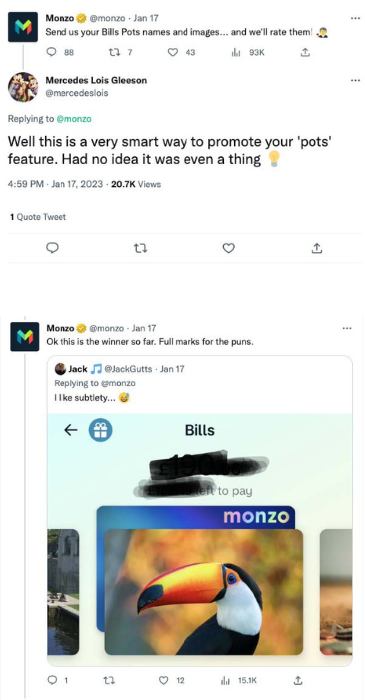
Why we love it:
This commenter beat us to it — Monzo found a stealthy way to show off one of their app’s coolest features, in the form of a game that their audience couldn’t resist taking part in. Even better, they cultivate further engagement and brand loyalty by making sure they follow up with fun replies and retweets.
What you can learn from it:
Don’t just post your content and disappear, When your audience is engaging, you need to be around to ride the wave. Reward their engagement by liking, replying, and – if you’ve struck gold with a game or other posts that’s provoking a flood of User Generated Content like Monzo did – you want to be resharing the strongest examples.
elevateapp – Game On, Brainiacs
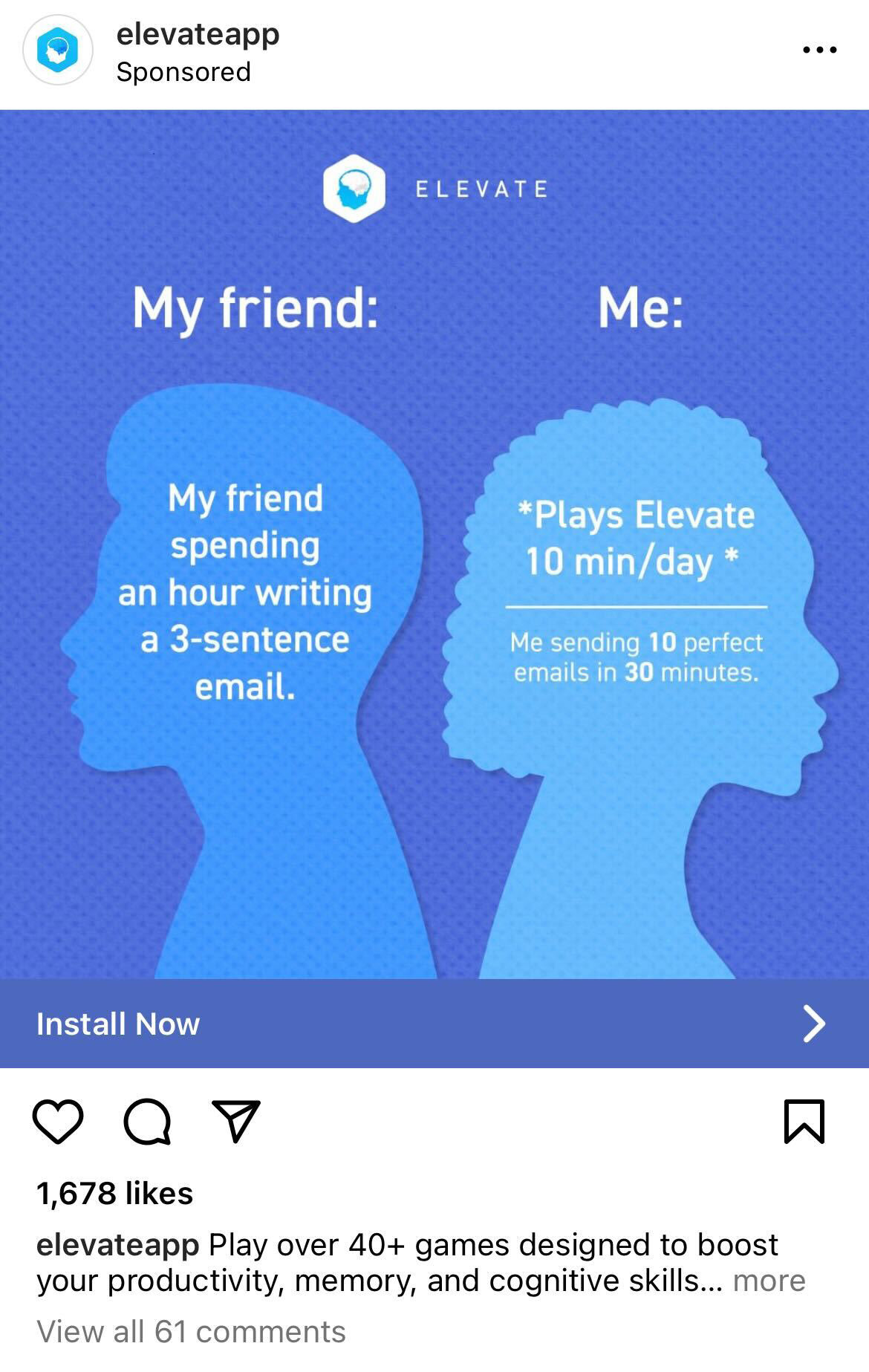
Why we love it:
This is a great example of how, firstly, comedy can help your Paid Ads perform better. And secondly, that relatability trumps execution every time. Because we don’t actually love the execution here (there’s a little bit too much happening at once) but the relatable truth at its core — “I hate wasting time writing what should be a simple email” — clearly resonates with the audience.
What you can learn from it:
Comedy isn’t just for your organic social content. Many of the jokes you write with Brands Against Mundanity Monthly are about the problems your customers face – and that your products solve. This makes them easily adaptable for use in your paid advertising.
Ryanair – Passenger Power
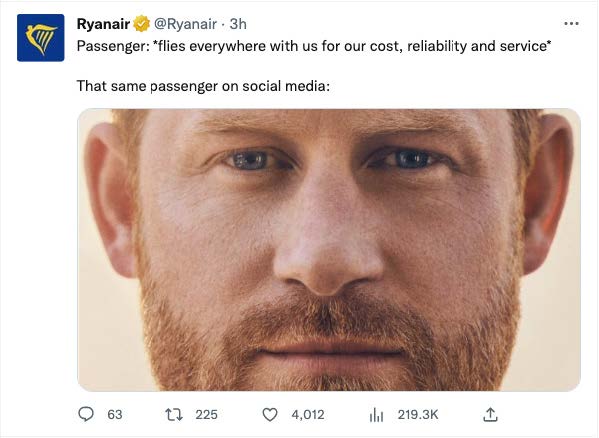
Why we love it:
Ryanair delivers the topical comedy goods once again, jumping on a trending topic. But this time, they’ve managed to mention the key benefits of their offering in a way that feels integral to the joke – rather than detracting from it. Plus – we love this combination of the ‘mini script’ and ‘meme’ joke formats, where the image becomes the second half of the script.
What you can learn from it:
You can mention your products, their features and their benefits in jokes… as long as it adds to the entertainment rather than detracts. Be honest with yourself. Does this feel like a blatant product pitch tacked onto an otherwise strong gag? If so, cut those elements. There are other ways to sell on social, so let your jokes do what they do best: entertain and drive engagement.
Yorkshire Tea – Biscuit Moderation
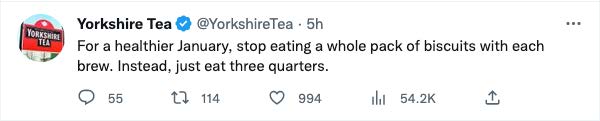
Why we love it:
Like the Innocent gag, this is a succinct and relatable one-liner. But unlike Innocent, Yorkshire Tea brought it into the specific world of their audience (who famously enjoy their tea with a few/many biccies).
What you can learn from it:
This gag could easily have been written from a Brands Against Mundanity Monthly template along the lines of “For a [X] January, stop [Y] and start [Z].” Point being: whenever you see a brand-safe joke you like out in the wild, consider whether you can remove the brand-specific elements and identify its basic (reusable) structure.
Dave Harland – Social Media Trolls
Why we love it:
Dave Harland, AKA The Word Man, is one of our favourite copywriters on LinkedIn. Here he’s using the ‘educational carousel post’ format that’s everywhere on the platform right now – but he’s subverting it by giving ridiculous (hilarious) advice inspired by his ideal clients’ pain points, to drive opt-ins for his email list.
What you can learn from it:
Make jokes about the problems you solve for your audience. For example, if you can help them with their community engagement on social media, make jokes about the problems they face there (e.g. not knowing how to deal with trolls). That way, the jokes will be ohso- relatable (and therefore funny) while also stoking desire for the solutions you provide.
innocent – 378 Days of Hilarity Ahead
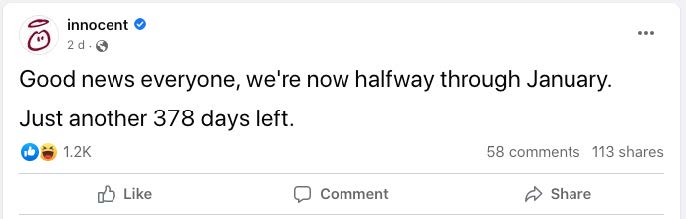
Why we love it:
It’s a succinct one liner that speaks to what everyone is thinking. The only thing that’s missing, for us, is any specific relevance to Innocent’s audience rather than just ‘the whole world’. But that’s kind of how Innocent roll,
and as a household name they can get away with it.
What you can learn from it:
In comedy writing, editing is everything. Even if you’ve written a joke using a Brands Against Mundanity template, don’t be afraid to cut words and shuffle around the word order until it feels like the tightest joke it can be – with the punchline twist as close to the end as possible.
Paddy Power – Porn Sounds
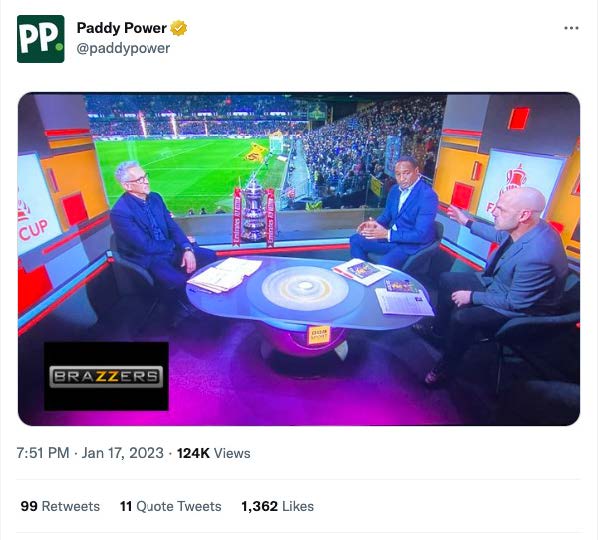
Why we love it:
Paddy Power are always quick to react with pitch-perfect gags whenever there’s breaking news that’s relevant to their audience of sports lovers. In this case, when “porn sounds” were heard in the studio during the BBC’s FA Cup broadcast…
What you can learn from it:
Reactive content is the Holy Grail of social – but not many brands have the in-house resource (read: team of funny brains with lightning fast typing fingers) to pull it off. So that aside, notice how this Tweet doesn’t include ANY caption – and the image itself only includes a single word – yet everyone who’s meant to get the joke will. That’s a level of comedy craft efficiency to aspire to.
craghoppers – user generated content
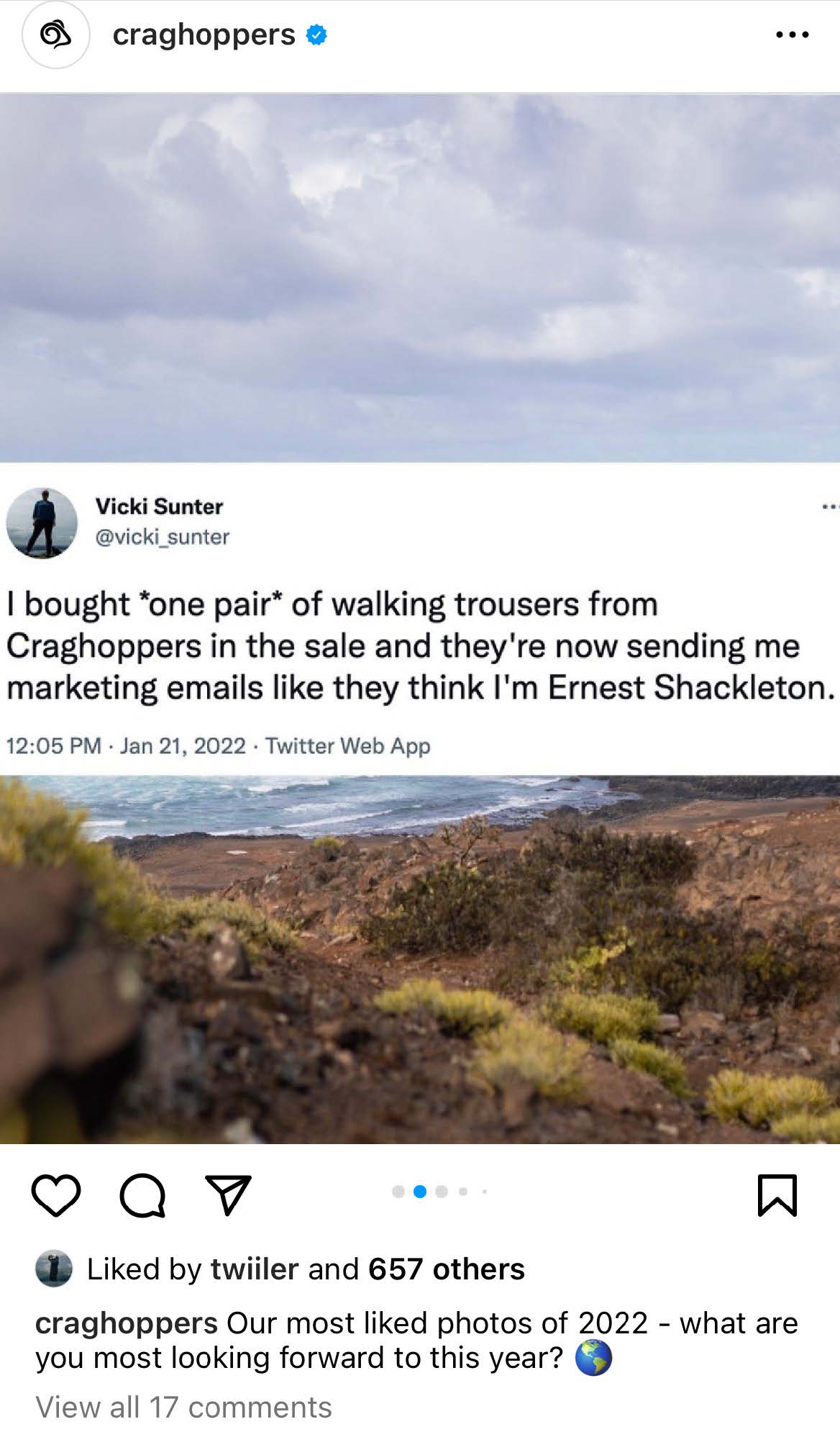
Why we love it:
This is a great example of taking UGC (User Generated Content) and elevating it into branded content. It’s a solid gag from one of Craghoppers’ customers – and the fact they’ve shared it on their feed (twice!) shows they’re not too proud to laugh at themselves.
What you can learn from it:
If you’re lucky enough to have customers posting playful observations about your brand, share them. Dropping a screenshot onto an appropriate background is a quick and easy way to make it feel like slick branded content. Just remember to give credit and ask permission.
Adobe – Audience’s Relatable Confessions
Why we love it:
Under the guise of a ‘serious’ New Year’s Resolutions post, Adobe calls out their audience’s relatable confessions and presents them in an engaging visual format that suits both their brand and the platform.
What you can learn from it:
‘List’ jokes (whether they’re New Year’s Resolutions-themed or otherwise) are a great excuse to reel off and riff around more than one of your audience’s relatable truths in a single piece of content – which is why we tend to include list formats in every edition of Brands Against Mundanity Monthly. Once you’ve got a really solid list gag (or idea for one) consider splitting it out into slides (or a Twitter thread) like this for greater interactivity and even more engagement.
Hootsuite – Gift Ideas for Social Media Manager in your life
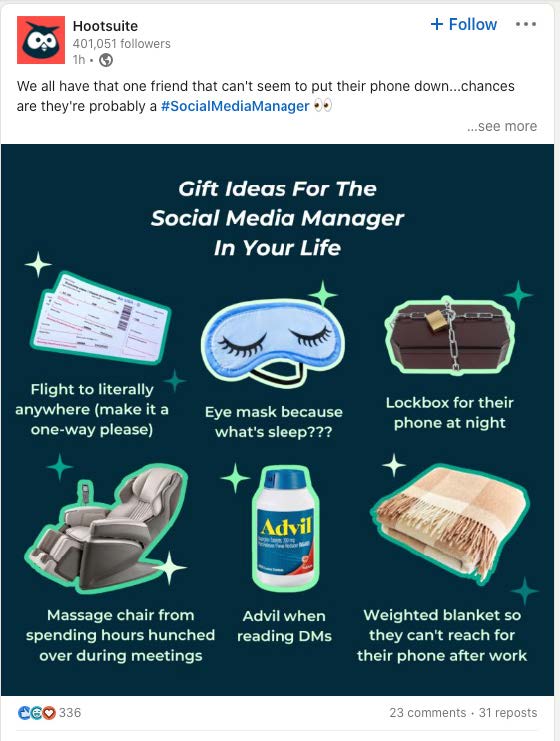
Why we love it:
We caught this one just after it was posted, so it hadn’t yet done huge numbers at time of screenshotting – but anyone who has posted from a business page on LinkedIn knows even this is pretty good going. And we knew our audience of social media marketers (i.e. you) would love this – because it’s SO painfully close to home.
What you can learn from it:
If you want to win on LinkedIn, take note of the three key things this post did well: it’s topical (posted just before Christmas); it’s relatable (hitting not one but six of their audience’s real-life daily pains); it’s visually engaging (on a platform that’s so often full of visually bereft text-only content).
Duolingo UK – Year in Review
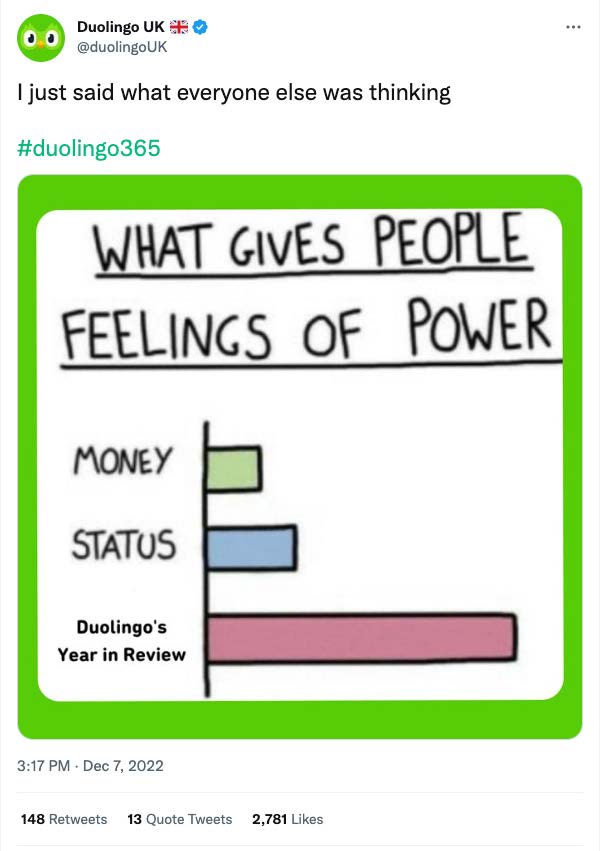
Why we love it:
We love graph gags! This one doesn’t reinvent the wheel (in fact it uses a longestablished template), but it was well timed. Duolingo used a joke to join the conversation their audience was already having on Twitter (comparing their end of year stats reports).
What you can learn from it:
Your subscription gives you bar chart formats like this one every month. BUT – where Duolingo can get away with a somewhat self-congratulatory punchline because their audience is genuinely passionate about their Year in Review – you’ll need to double-check that your punchlines reflect your audience’s genuine relatable truths, and not just what you wish they felt.
Also – note how the green border is a quick and easy way to make this recycled graph gag feel like fresh branded content.
Yorkshire Tea – Upsetting Everyone
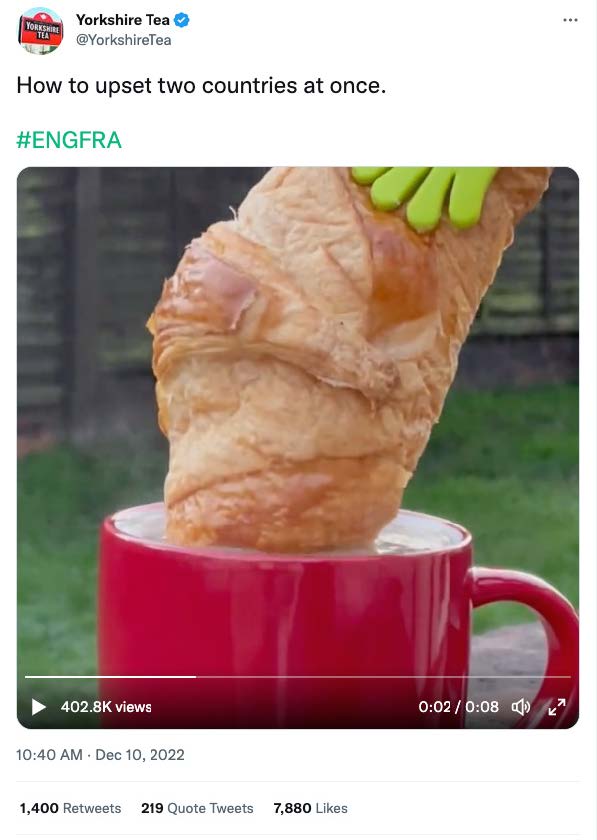
Why we love it:
On the day England played France in the football World Cup, Yorkshire Tea dipped a French croissant in English tea – making a joke about ‘upsetting’ everyone, while never being at risk of offending anyone at all. Topical silliness at its absolute safest.
What you can learn from it:
Keep up-to-date with what’s going on in your audience’s world – the news, pop culture, trending topics – so that you can join the conversations they’re already having. And if you see the opportunity to do that through inoffensive, brand-adjacent banter – whether that’s text gags, memes or a silly video like this – even better.
Epic Reads – Pros and Cons
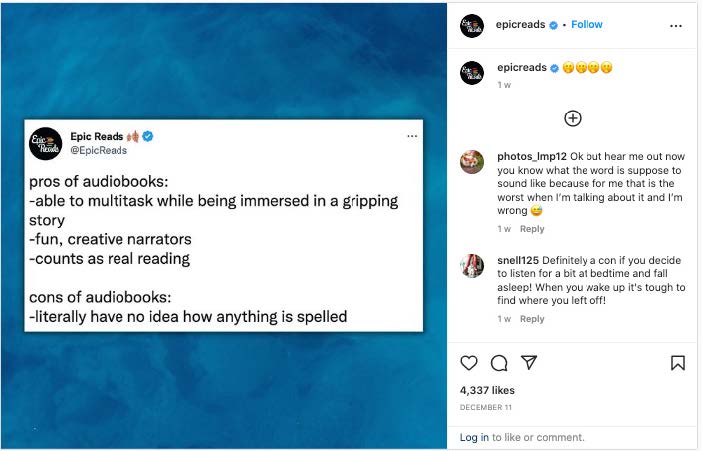
Why we love it:
Another one for the book nerds (it’s a term of endearment, honest). Epic Reads often post content that – while not always hilarious – it’s hugely relatable to their audience. The pros/ cons bullet point format is a great way to highlight several of their audience’s relatable truths in a single gag.
What you can learn from it:
The more relatable your jokes are, the funnier your audience will find them. Also – you can get your text gags ready for Instagram in no time by simply Tweeting them, then screenshotting the Tweet. What started out as a time-saving hack has become a style in its own right. Give it a go and see if it resonates with your audience.
SparkNotes – Altered Song Lyric
Why we love it:
This is designed to appeal primarily to SparkNotes’ audience – who will clock the reference to ‘The Tell Tale Heart’ by Edgar Allen Poe. But even those who weren’t fully in-the-know found it funny – because on the face of it, it’s just a topical format with a silly, dark twist. (And yes, we know it’s technically three years old – but it’s so good, it attracts fresh engagement every December!)
What you can learn from it:
Reference Edgar Allen Poe in every post? No. Do your research to find the right level of dark humour that your audience enjoys? Probably a good idea. Use the ‘altered song lyric’ joke templates included in BAM Monthly, to easily crank out this style of gag? Absolutely.
Halfords – De-icing hack
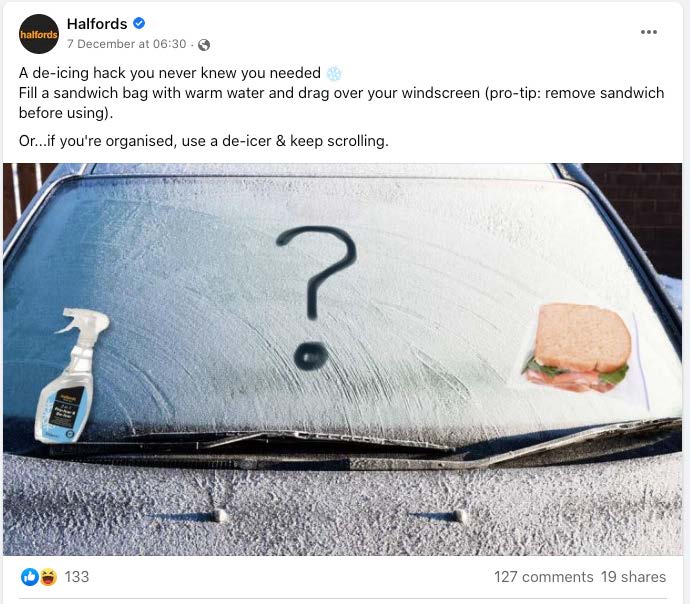
Why we love it:
We’ve highlighted Halfords as a rising star before and this Teach post definitely has potential. They’re teaching a lesson their audience will appreciate – which just so happens to position their product as the best solution – and they’ve included a splash of entertaining silliness to drive engagement.
What you can learn from it:
Your content doesn’t have to be either educational OR funny. It can be both. Start combining these parallel objectives with the bonus Teach and Showcase templates we give you each month with your subscription – and once you’ve got the hang of those, start stealing inspiration from posts like this.
Warhammerofficial – Bingo time

Why we love it:
Warhammer knows how to cater to their niche audience – with niche jokes that only that audience would ‘get’. The Bingo Card format is particularly genius as they’ve managed to present nine of their audience’s relatable truths in a single piece of comedy content.
What you can learn from it:
Above all others, Instagram is the platform for visually arresting content. So consider inventive ways you can make your content look instantly different from everybody else’s – and/or just steal this Bingo Card idea…
Ryanair – elf on the shelf
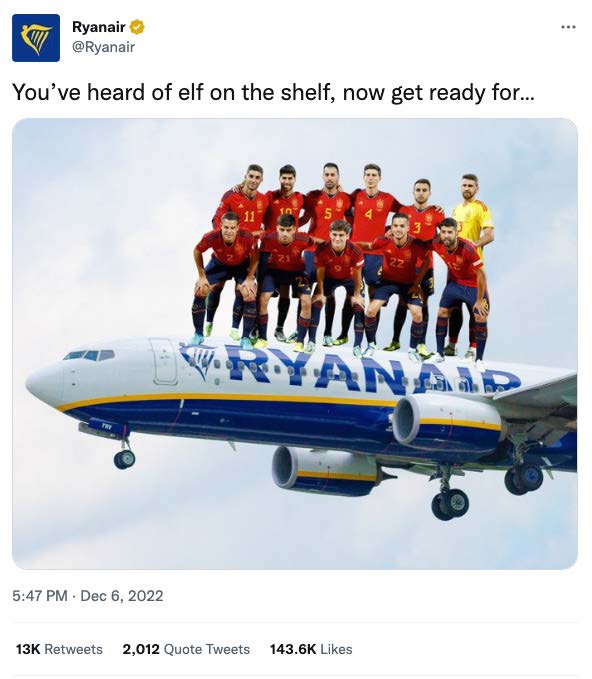
Why we love it:
Posted the day after Spain were knocked out of the World Cup by unlikely victors, Morocco, it made sense for Ryanair to stick them on the plane home. Combined with the seasonal (Christmas) topicality of the popular ‘elf on the shelf’ meme, this one is working on a couple of different levels.
What you can learn from it:
We give you fresh, original joke formats every month. But don’t be afraid to throw some established formats (for example a topical or trending meme) into the mix too – especially if you can find a way to spin it into a joke that only your brand (or at least, a brand in your space) could make.
Henry Sotheran LTD – we’re closed today
Why we love it:
Sotherans is an antique bookseller in London, and their Twitter feed is renowned for being very silly indeed. This tweet successfully combines an otherwise-dry announcement (“we’re closed today”) with a punchline (the silly reason why – which will be relatable to anyone who has ever visited an antique bookstore).
What you can learn from it:
By tacking a joke onto your important announcements, they’re much more likely to gain traction and be shown to a bigger slice of your audience. Just make sure the joke is one that your audience can relate to – and one that makes sense in the context of the announcement.
Corporate Rebels – Response Times
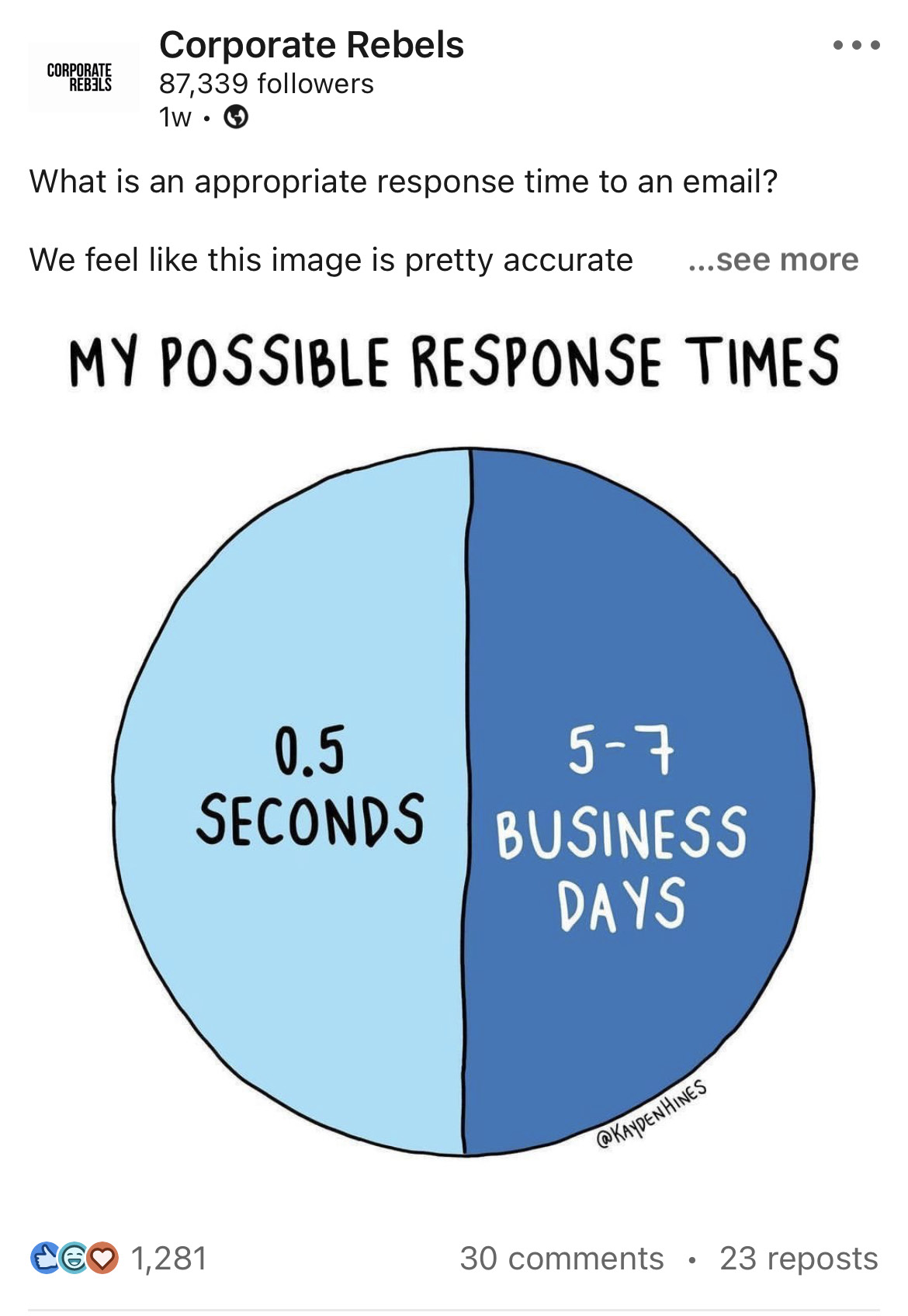
Why we love it:
Graph gags often go down very well on LinkedIn – because it’s a platform where users expect to encounter visual representations of data. This one expresses a simple sentiment that’s highly relatable to Corporate Rebels’ audience: “I tend to either respond instantly, or it takes me ages. There is no in-between!”
What you can learn from it:
Experiment with different design styles, including the ‘hand drawn’ style shown here, to learn what your audience best responds to. But remember – the most important thing is the relatable truth at the core of your joke.
Prime Video UK – Cheers to the world
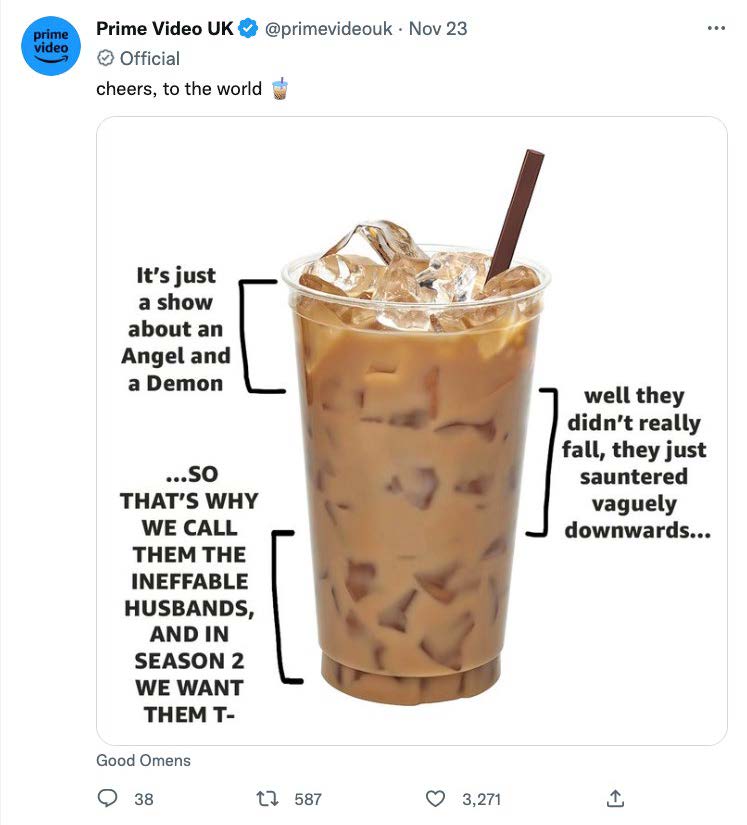
Why we love it:
Do you know what’s going on here? Neither do we. (Ok, we do – but only because we watch a lot of nerdy TV.) We love this because it’s aimed at a niche segment of Prime Video’s audience, who are the only people in the world who could possibly understand it – let alone find it funny – and that’s precisely WHY they’ve engaged with it.
What you can learn from it:
You don’t need to entertain everyone. You need to entertain your audience, and the people you want to join your audience. So go ahead and create content that’s extremely niche – and don’t worry about whether your mum gets the joke (unless she’s in your target audience).
Spotify – Wrapped
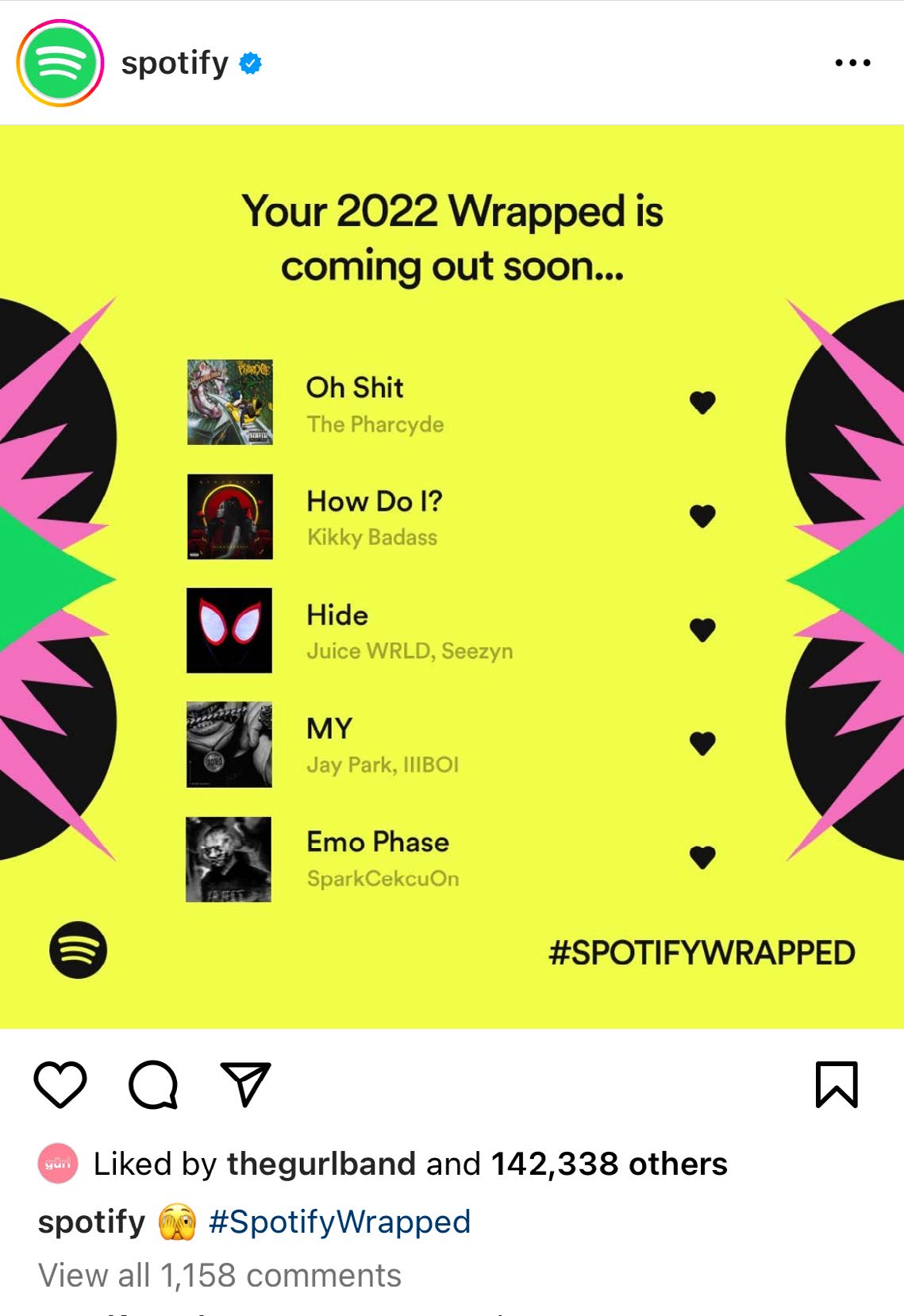
Why we love it:
We love it when brands combine announcement posts with comedy. With Spotify’s annual ‘Wrapped’ event approaching, they found an eye-catching and satisfyingly meta way to highlight their audience’s relatable truth, “I’m worried my Wrapped will reveal my embarrassing listening habits” and this post got a shedload of extra engagement as a result.
What you can learn from it:
Next time you need to announce something (an award nomination, an upcoming event, a new product development…) consider how you could elevate the post with relatable comedy. (Hint: adding a brands Against Mundanity Monthly joke as the image is an easy win.) That way, it’s guaranteed to reach many more eyeballs AND stick in your audience’s minds for much longer.
Corporate Rebels – expectation vs reality
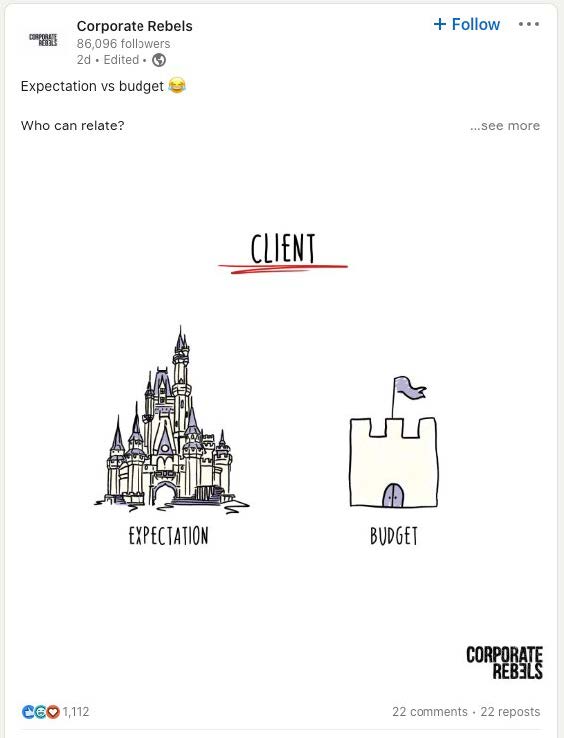
Why we love it:
Corporate Rebels prove that you can and should be funny on LinkedIn. This cartoon twist on the classic ‘expectation vs reality’ format expresses a sentiment that their audience will find funny because it’s true (B2B clients tend to want better results than they can afford to pay for).
What you can learn from it:
Often, the simpler the gag, the better. This example strips out anything extraneous – it’s easy to ‘get’ in an instant, and there’s absolutely no possibility that a reader could misunderstand the joke or the message. Revisit your work with fresh eyes, looking for ways you can simplify it, and double-checking that it can’t be read the wrong way.
Nando’s – Fix Problems
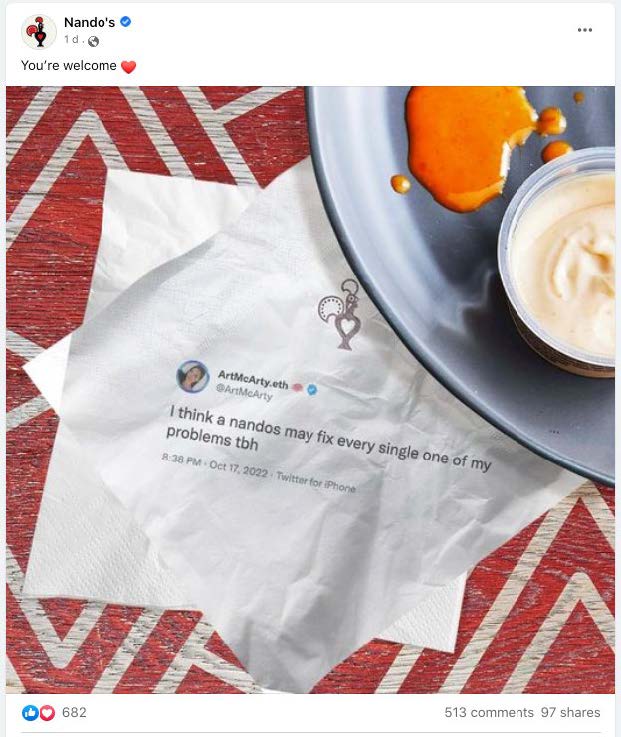
Why we love it:
This is a great use of UGC (User Generated Content) from Nando’s. They found a tweet that expresses one of their audience’s relatable truths – and instead of simply sharing a screenshot, they’ve elevated it with some classy design choices.
What you can learn from it:
Brands that aren’t already household names don’t always have access to much UGC, so let’s focus on the design element. You can elevate your own text gags by combining them with an image that your audience can relate to — for example one that reflects the experience of using your product, as Nando’s did here (or even a lo-fi option like physically writing the joke on a post-it note, if that’s appropriate for your audience).
ryanair – Thinking of seat number

Why we love it:
Ryanair are posting comedy across all platforms – but we love how they’ve adapted their content for each. They’ve developed a unique lo-fi branded design format for memes on Instagram which – when paired with an observation that’s genuinely relatable for their audience – consistently delivers great engagement for them.
What you can learn from it:
You can add your branding to your memes. Just make sure it doesn’t get in the way of the joke, or worse – make the post look sterile or salesy. And above all – memes should always hinge on a relatable truth that’ll make your audience go “yes, that’s so me!” just before they smash the like button.
Specsavers – Reacts
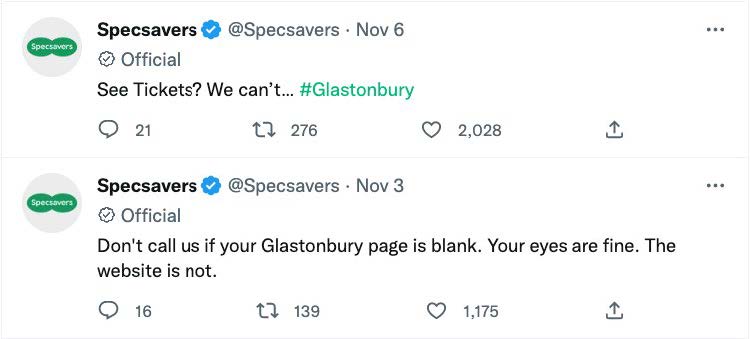
Why we love it:
Specsavers’ social team are always ready to react – so when Brits took to social media to complain that they couldn’t get a Glasto ticket due to technical issues, this was an easy win for Specsavers. Yes, it’s pretty much the same joke they always make. No, we don’t mind too much.
What you can learn from it:
Join the conversations that your followers (and even better – your potential followers) are having by keeping an eye on trending keywords and hashtags. When you’re ready to jump aboard, make sure you’re adding something new to the conversation – ideally a joke or witty observation that ONLY your brand could make.
innocent – Stay in Bed
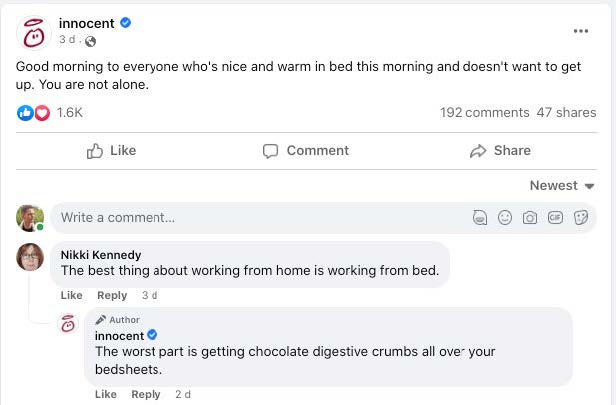
Why we love it:
It’s simple, it’s relatable, it’s innocent in tone.
What you can learn from it:
This post just goes to show that relatability is everything – and that expressing a sentiment that your audience strongly relates to, especially if you can time it perfectly (this one went out on a rainy Monday morning), can generate engagement. Even if you can’t quite muster the motivation to turn it into a joke.
Paddy Power – Vote on the poll
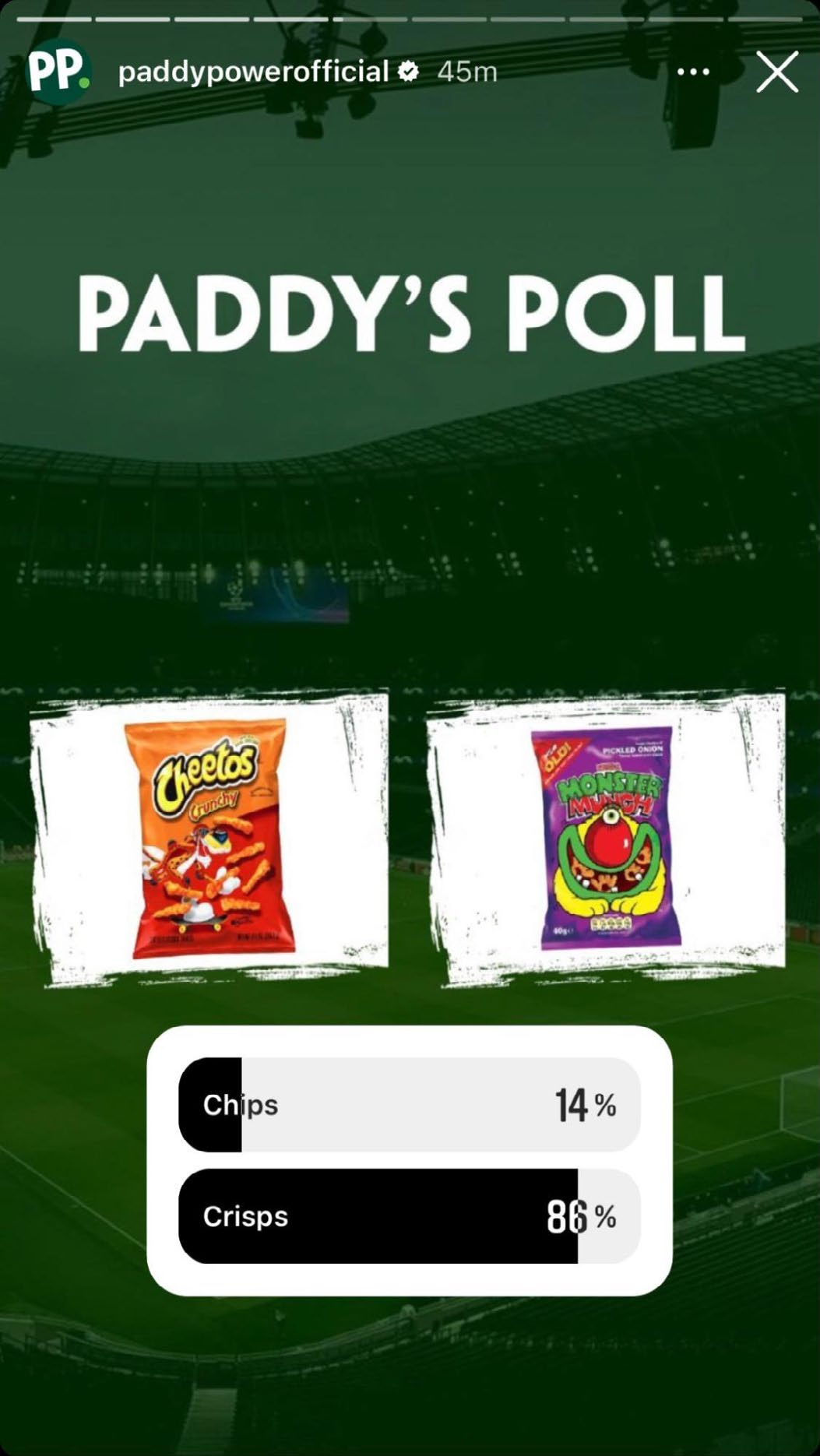
Why we love it:
Ahead of the England vs USA Football World Cup game, Paddy Power entertained their sports-obsessed audience with a ‘USA vs UK’ poll in their Instagram stories. We love the topicality, the silliness, the interactive element and even the effort they’ve put into the design (where other brands might have stuck to using the platform’s native tools, someone’s clearly opened Canva for this one).
What you can learn from it:
Experiment with polls in your Instagram stories. Not only do they make great engagement bait – you can also use them to learn something about your audience (beyond which word they use for ‘fried discs of potato sold in foil bags’). You can then use the insights to create even more relatable content.
Yorkshire Tea – Goes Wrong
Why we love it:
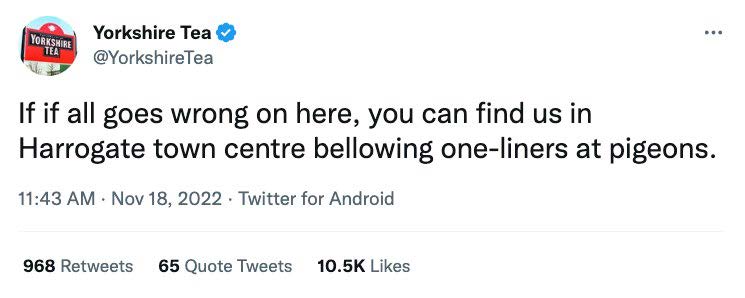
When everyone on Twitter was talking about the fact that the platform’s days could be numbered (using phrases like “if it all goes wrong here, you can find me on [X]”), Yorkshire Tea joined the conversation with a meta one-liner that encapsulates the combination of silliness and cosiness they’ve become known for there.
What you can learn from it:
When your entire audience is talking about one thing – it pays to become part of that conversation. The Brands Against Mundanity Monthly cards are a great way to develop your gag-writing skills so that you can eventually craft up-to-the-minute topical one-liners from scratch. Also, if your joke is solid, then a tiny typo isn’t ALWAYS the end of the world…
Walkers Crisps – The Meal Deal
Why we love it:
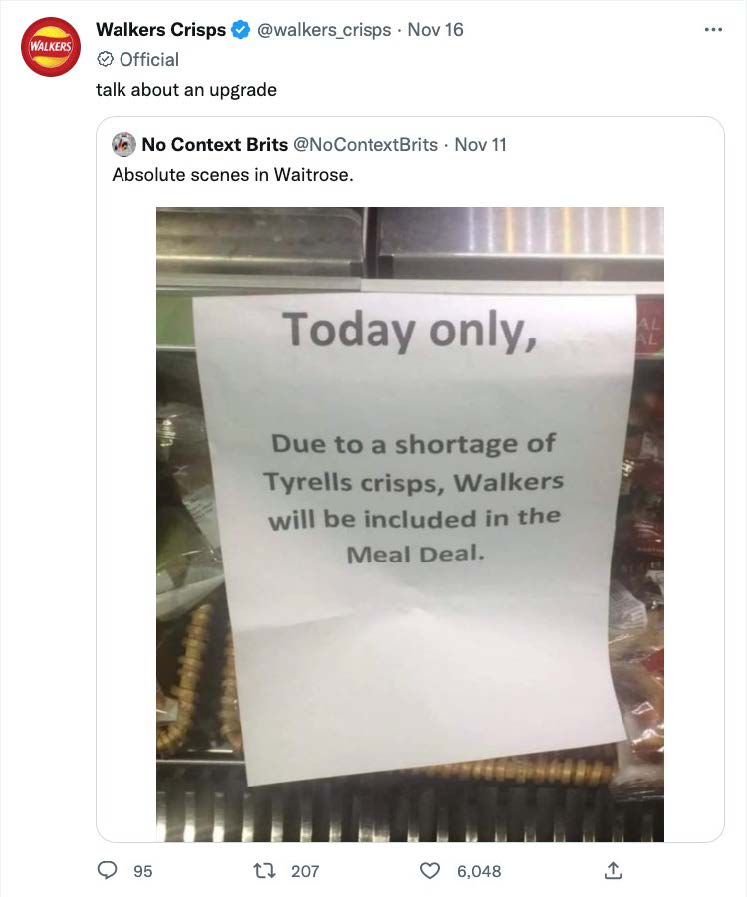
Walkers are starting to hone their comedy chops on social – and the success of this quote tweet shows it pays to have a social media team that’s capable of a simple-but-effective witty retort when the opportunity presents itself. Now we’ll see if they can ride the algorithmic wave with some standalone gags…
What you can learn from it:
If you want the best results on social, it’s not enough to simply broadcast quality content. You’ll also need to spend time hanging out on your primary platforms, monitoring trending topics that are relevant to your audience, and keeping your eyes open for content that you might be able to react to.
Adam Hunt
Founder and Head of Growth at White Label Comedy. He spends his days convincing serious brands that funny is the most profitable thing they're not doing.
Your marketing isn’t broken. It’s just boring.
It’s time you met the agency behind the internet’s most profitable funny brands.
Work with us