The Em-Dash Theory (And Other Ways to Spot AI Writing)

Founder and Head of Growth, White Label Comedy
How do you tell if writing was generated by AI?
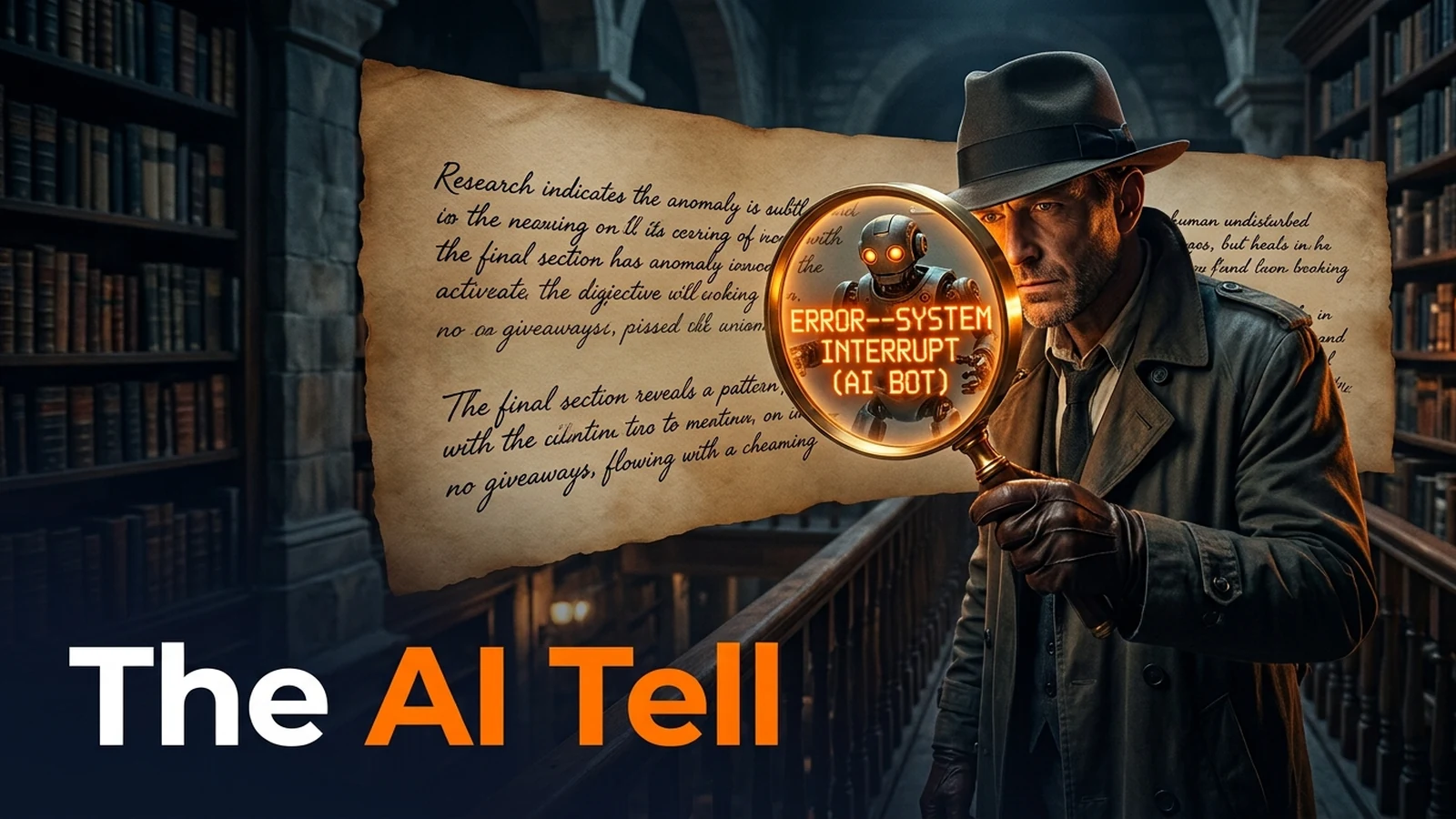
Look for the tells. The long dash it reaches for constantly, the unnecessary quotation marks, and pet words like "indeed", "moreover" and "robust". The moment a reader clocks those patterns, they mentally file your copy under machine and stop trusting it. The fix is to write like a human, on purpose, and strip the giveaways out.
My theory about the long dash
I have a theory. I think the makers of the big AI writing tools deliberately taught them to lean on that long horizontal dash, the one that sits between a hyphen and a full sentence break.
Call it a secret handshake for robots. I genuinely think they want one really obvious telltale sign that a piece of copy came out of their tool. And once you notice it, you cannot unnotice it. It is everywhere.
The other giveaways
The dash is not the only one. AI writing has a whole set of nervous tics:
- Unnecessary quotation marks around perfectly ordinary words
- An overuse of joining words like "indeed" and "moreover"
- A strange obsession with calling everything "robust" (I swear, if I see one more "robust solution" I am sending the chatbot to bed without any dinner)
- A weirdly even, over-balanced rhythm where every sentence is the same length
None of these are wrong, exactly. They are just patterns. And patterns are what the human eye is brilliant at spotting.
Why this matters for your marketing
Here is the part that actually costs you money. When you are using AI to write ads, the last thing you want is for them to look like AI wrote them.
Because the instant someone spots those signatures, something clicks off in their head. They stop reading. They stop engaging. They stop buying. It does not matter how good the underlying offer is. The copy has told them, quietly, that nobody really bothered, and that is a terrible first impression.
How to write AI copy that does not sound like AI
The answer is not to abandon AI. It is to treat "sounds like a human" as a non-negotiable part of the job, not a nice-to-have.
That means cutting the tells out on purpose: killing the long dashes, dropping the "moreovers", trimming the "robusts", and varying your sentence length so the rhythm feels like a person talking rather than a machine ticking boxes. Done well, you get the speed of AI with copy that reads like it was written by a particularly witty human who had exactly the right amount of coffee.
Meet Brian
Getting an AI to drop its tells is hard, and honestly, most will wriggle straight back into old habits the second you stop watching. That is a big part of what we trained out of Brian, our AI Comedy Marketing Machine.
Brian is built to write like a human: no robotic patterns, no giveaway punctuation, just funny, high-converting copy that sounds like it came from someone who actually understands your audience.
Take Brian for a spin and write ads nobody can tell were touched by AI.
Adam Hunt
Founder and Head of Growth at White Label Comedy. He spends his days convincing serious brands that funny is the most profitable thing they're not doing.
Your marketing isn’t broken. It’s just boring.
It’s time you met the agency behind the internet’s most profitable funny brands.
Work with us